
2026.03.11
News
Faculty and Graduate School of Science and Engineering Conclude Collaborative Agreement with Five ASEAN Institutions ―Launch of "MANGOs" Academic Consortium for Metaverse-Based Education―
The Faculty of Science and Engineering and the Graduate School of Science and Engineering of Chuo University have concluded a collaborative agreement with five ASEAN institutions led by Chulalongkorn University (Thailand).
The primary objective of this agreement is to establish a partnership aimed at building a platform where users can experience the educational and research content of participating institutions within a virtual space. In addition to Chuo University and Chulalongkorn University, the partnership includes Srinakharinwirot University (Thailand), the Praboromarajchanok Institute (Thailand), the University of the Philippines Open University (Philippines), and the Faculty of Information Technology at Duta Wacana Christian University (Indonesia), bringing the total to six participating institutions.
This platform is an international initiative titled "MANGOs" (Metaverse of Academic Nexus for Global Opportunities). While portions of its content have already been released, the Faculty and Graduate School of Science and Engineering of Chuo University have joined the initiative. Specifically, Professor Mitsunori Makino plans to utilize this platform as a testbed for his research in Virtual Reality (VR) and related technologies such as AR and MR.
*MANGOs(https://www.mangosgo.com/)
The signing ceremony for the collaborative agreement was successfully held on Wednesday, March 4, 2026, during the "WORLD IMMERSIVE LEARNING LABS SYMPOSIUM 2026" academic conference in the Philippines. Professor Makino attended the ceremony as the representative for Professor Hiroko Shoji, Dean of the Faculty and Graduate School of Science and Engineering.
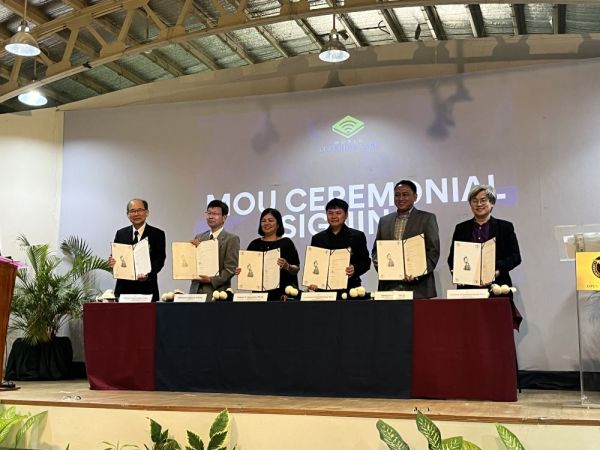
At the signing ceremony: Professor Makino is second from the left.
Mitsunori Makino, Professor
Department of Information and System Engineering, Faculty of Science and Engineering
> Makino Laboratory
> CHUO UNIVERSITY Academic Researcher Database
> researchmap
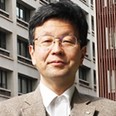
Professor Makino’s research focuses on the development and construction of systems that benefit people, society, and the environment through the harmony and synergy of virtual and real worlds. His work spans (1) Computer Graphics (CG) technology, (2) Presence/Realism technology, (3) Visualization technology, and their various applications. Furthermore, he aims to integrate these advancements into the evaluation of competency development systems at Chuo University—an initiative he has been dedicated to for nearly 20 years.
<International Educational Initiatives>
In 2021, Professor Makino participated as a representative member of the Japanese working group in a project led by the World Federation of Engineering Organizations (WFEO). He contributed to establishing international standards for the knowledge and competencies required in higher-level engineering education. The WFEO is a global organization for engineering professionals, established in 1968 under the auspices of UNESCO. Currently, Professor Makino also serves as a Director, Chair of the Accreditation Committee, and in other roles for the Japan Accreditation Board for Engineering Education (JABEE). In these roles, he is actively engaged in initiatives to ensure the international equivalence and quality of engineering and IT education in Japan.
Click here for more details. (link available in Japanese only)
<Research Initiatives (Selected)>
"Matsuyama High School Newspaper No. 428 (2)" (Published December 15, 2025) (link available in Japanese only)
This article, written by high school student reporters, introduces Professor Makino and his work.
Peer-Reviewed Papers: “A VR System of Slide Position Self-Learning with Controllers Position Detection and Tactile Feedback for Trombone Beginners”
(Presented at ECTI-CON 2024 (IEEE))
DOI: 10.1109/ecti-con60892.2024.10594849
This research focuses on supporting self-study for musical instruments through an advanced combination of VR and tactile feedback. The project is also expanding its application to other instruments. We aim to utilize the self-study VR systems developed through this research to establish an environment where students beyond Chuo University can also benefit, through the 'MANGOs' consortium.
Collaboration with Uwajima Fisheries High School: "Tuna Dissection Learning Support VR System"
In 2020, the Makino Laboratory leveraged its expertise to develop a "Tuna Dissection Learning Support VR System" for practicing the tuna dissection shows performed by Uwajima Fisheries High School. This system allows students to practice without using actual tuna—a precious marine resource. By applying Information Engineering to the high school’s research and educational initiatives, this collaboration embodies the spirit of Society 5.0 for SDGs.
Click here for more details. (link available in Japanese only)
<Publications>
Graphics (Nippon Hyoron Sha, 1994, Co-author)
Forensic Investigations and Risk Management in Mobile and Wireless Communications
(IGI Global, 2019, Co-editor)

