Faculty of Science, Engineering and Society
Integrated Sciences and Engineering for Sustainable Societies
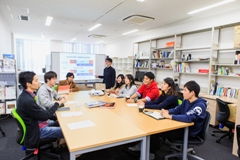
The Department of Integrated Sciences and Engineering for Sustainable Societies (ISES) addresses the challenges involved in achieving human well-being in balance with environmental needs. Among the areas of specialization at ISES, human cognition and behavior, biological statistics and human wellness provide
the foundation for understanding the human mind and human biology. Engineering in relation to energy and water issues provides technical solutions for renewable resource infrastructure in support of a circular economy. Environmental science and conservation ecology together with urban planning and design place the activities of the department firmly in the context of sustainable cities and regions.
The curriculum at ISES gives students access to a variety of academic fields, providing a solid base for tackling sustainability issues using relevant knowledge from different disciplines. Fundamental aspects of theory and real world applications are covered thoroughly across the areas of specialization at the department. Project-based learning (PBL) is used actively to foster problem-solving skills such as recognizing challenges, deriving specific tasks and organizing them in a coherent research plan. Methods for collecting and analyzing data and presenting results in suitable formats for different target audiences are taught in a hands-on manner, enabling students to apply them successfully. Interpersonal skills are given particular attention, and the ability to work as part of a team is one of the strengths that students develop. Graduates are thus well-prepared to excel in leading roles, contributing to the solution of complex problems that human societies are facing.
About thirty percent of ISES students proceed to graduate courses in the Civil, Human and Environmental Engineering Course which is jointly offered by ISES and the Department of Civil and Environmental Engineering. The graduate program provides opportunity for gaining in-depth knowledge of the disciplines represented at both departments and for conducting cutting-edge research within the framework of sustainable societies.
International exchange and collaboration are priorities at ISES, reflected in a high number of incoming and outgoing international students. ISES has the highest participation rate in international exchange programs among all departments across Chuo University, supported by a globalized platform for education through international collaboration. This creates a stimulating environment in which scientific ideas and practical applications can be discussed, and many of the approaches developed here subsequently turn into effective tools used by practitioners in business and administration.
Many students at ISES successfully obtain state-accredited professional qualifications such as the Associate Professional Engineer and the Certificate for Statistics (level-2) as well as high scores in tests of English language proficiency (TOEIC, IELTS, and TOEFL), giving them an additional advantage when applying for positions.
The unique opportunities offered at ISES continue to inspire students to acquire an exceptionally broad knowledge and a wide range of skills in relation to
humans and their environment. Equipped with these extraordinary tools, they pursue successful careers in diverse research, engineering, and business domains.
Fields of interest
- Environmental science
- Conservation ecology
- Urban ecology and green infrastructure
- Water metabolic system engineering
- Environment and energy management
- Applied cognitive neurosciences
- Epidemiology and Biostatistics
- Human wellness and life saving