
Academics
Faculty of Fundamental Science and Engineering | Faculty of Science, Engineering and Society | Faculty of Advanced Science and Engineering
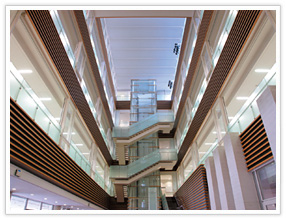
Korakuen Campus, home to the Faculty of Fundamental Science and Engineering, the Faculty of Science, Engineering and Society, and the Faculty of Advanced Science and Engineering, is located on high ground amid lush greenery in the Korakuen district of Bunkyo-ku, central Tokyo. Equipped with the latest educational and research facilities, the three faculties, together with the Graduate School of Science and Engineering and the Institute of Science and Engineering, are proud of its comprehensive education and research capability.
The three faculties place a high priority on fostering basic and universally applicable academic abilities, and also on nurturing talented scientists of independence and self-reliance, by equipping students with knowledge that will allow them to respond flexibly to whatever problems emerge in the rapidly developing science and technology. As a result, the number of presentations made at academic conferences by the graduate students reaches more than 350 per year, representing the world-class high-level intellectual productivity of the faculties.
Departments:
Faculty of Fundamental Science and Engineering
Mathematics
Physics
Applied Chemistry
Biological Sciences
Faculty of Science, Engineering and Society
Civil and Environmental Engineering
Data Science for Business Innovation
Integrated Sciences and Engineering for Sustainable Societies
Faculty of Advanced Science and Engineering
Precision Mechanics
Electrical, Electronic, and Communication Engineering
Information and System Engineering
Date of Founding: 2026
Campus: Korakuen Campus
Number of Students: Undergraduate Student Enrollment
Brochure is here(895KB)
Competency Development in the Three Faculties
The word competency refers to a portion of behavioral characteristics that utilizes knowledge for pursuing a certain objective. Recently, much attention has been focused on competencies as important demands for professionals as well as individuals. As a part of the educational reform activities, we have started an educational program for systematic competency development since 2008. Firstly, each department has created a more specific definition of the professional image that is expected for graduates of the department. Then, the definition was set for 7 key competencies (communication, problem-solving, knowledge acquisition, organized behavior, creativity, self-realization, and specific ability in students' major), which in turn were carefully refined into a total of 33 keywords. Finally, each keyword was divided into 5 stages (in other words, as many as 165 items were created!) in order to develop an achievement level check list (also known as rubrics). Through the rubrics students are expected to check their competencies regularly by themselves as well as to be checked by professors/TAs. This approach enables direct and objective assessment of potential ability and behavioral attributes, and now it is considered as one of the leading educational systems in Japan.
Academic Minor System in the Graduate School of Science and Engineering
In addition to a student's academic major, an academic minor system has been implemented in the Graduate School of Science and Engineering since 2003. This educational program features systematic study of advanced topics in interdisciplinary fields. Currently, the GSSE offers a total of 6 academic minors (Disaster/Danger Management Engineering, Environmental Engineering, Data Science, Nano-Technology, Electronic Society/Information Security, and Sensory Robotics). All of these minors are fields in which the GSSE possesses strong capability, and are expected to grow greatly in the near future. When conducting academic minors, teaching faculty from different academic majors cooperate to provide research guidance through lectures and the creation of research papers. Minors allow students to learn the research methods and acquire specialized knowledge in other academic fields. Therefore this academic major/minor system realizes reciprocal educational effect which prevents graduate students from being immersed solely in their affiliated majors.
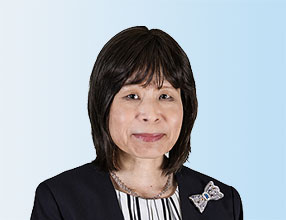
Welcome to the School of Science and Engineering and the Graduate School of Science and Engineering.
Since its establishment, the Faculty of Science and Engineering has been dedicated to cultivating science and engineering professionals who contribute to social progress, in accordance with Chuo University’s founding philosophy: “Fostering the Ability to Apply Knowledge to Practice.” The Faculty has expanded to ten departments and developed a diverse range of research and education over the years. Beginning in the 2026 academic year, the Faculty of Science and Engineering has been reorganized into three new faculties: the Faculty of Fundamental Science and Engineering, the Faculty of Science, Engineering and Society, and the Faculty of Advanced Science and Engineering. Under this new structure, the faculty members of these three faculties belong to the School of Science and Engineering, operating as an integrated unit. This transition is intended to further enhance the specialization and appeal of our educational programs.
Meanwhile, the Graduate School of Science and Engineering remains a single, unified organization as before. Through the adoption of this system—where the undergraduate faculties are reorganized and divided while the graduate school remains integrated, and the faculty members belong to the School of Science and Engineering to operate the three faculties and the graduate school in a unified manner—we aim to both encompass an increasingly diverse and rapidly advancing range of research fields as an organization and provide an environment in which students can more easily select departments and majors aligned with their own personal interests and curiosity.
Through close collaboration between the Faculties and the Graduate School of Science and Engineering, our undergraduate students have the opportunity to participate in state-of-the-art research, which is one of the distinguishing features of our academic programs. In addition, we provide a variety of valuable opportunities for students who wish to master leading science technologies, including participation in joint research projects with domestic and overseas universities, research institutes, and companies, as well as attendance at international conferences.
Society today requires global partnerships and the integration of insights from diverse fields such as AI and data science, environmental issues, and biosciences. The Faculties and Graduate School of Science and Engineering strive to cultivate individuals capable of coping with these complex situations. To this end, we focus on nurturing human talents with a global perspective and understanding of different cultures, beyond their authentic expertise in specialized fields. In addition to university-wide initiatives to strengthen English education and promote international exchange programs, we have expanded our distinctive short-term exchange programs and internship opportunities with global companies. We are creating an optimal environment that empowers our students to grow into global-minded scientists through interactions with overseas universities and research institutions, enabling them to reach out to different values and cultures.
Our Korakuen campus, located in central Tokyo yet surrounded by a serene environment, offers convenient access to business communities and public institutions. This ideal location allows students to actively participate in both on-campus and off-campus projects, as well as local partnership activities, providing them with opportunities to experience “practical learning” through direct engagement with society. We believe that such hands-on experiences foster genuine competence and open diverse career paths for our students. In addition, strong support from our alumni who are active across a wide range of industries, and the dedicated guidance provided by Chuo University’s Career Center further distinguish our programs and enhance our students’ professional development.
We look forward to meeting everyone who is interested in studying with us at our Korakuen campus.
Hiroko SHOJI
Dean, School of Science and Engineering/Graduate School of Science and Engineering








Close