
2026.11.27
News
Chuo University Researchers Host a Seminar at the Japan Pavilion of COP31 (UNFCCC)
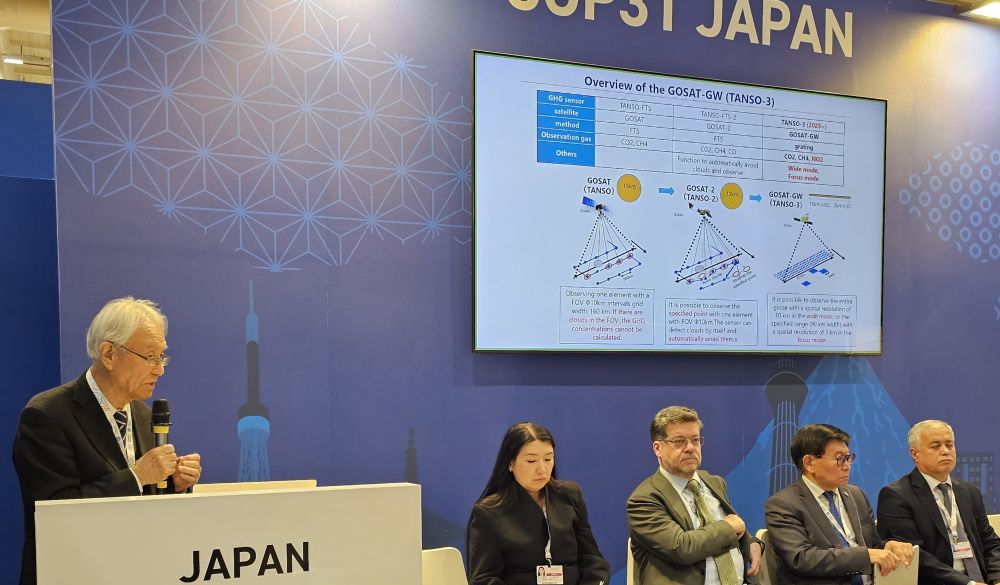
Keynote speech by Institute Professor Masataka Watanabe
On 14 November 2026, Chuo University co-hosted, with the Ministry of the Environment of Japan, the seminar "Hybridizing Top-Down and Bottom-Up Approaches to Strengthen GHG Accounting with GOSAT" at the Japan Pavilion of the 31st session of the Conference of the Parties (COP31) to the United Nations Framework Convention on Climate Change (UNFCCC) in Antalya, Türkiye. Four researchers of the Research and Development Initiative, Chuo University, took part: Institute Professor Masataka Watanabe (keynote speaker and panel moderator), Institute Professor Itsushi Uno (master of ceremonies), Assistant Professor Akihiro Oba, and Researcher Yoko Saito.
Following opening remarks by Mr. Takeshi Sekiya, Vice-Minister for Global Environmental Affairs, Ministry of the Environment of Japan, Professor Watanabe delivered a keynote speech proposing a "hybrid approach" that integrates top-down greenhouse gas (GHG) emission estimates derived from Japan's Greenhouse gases Observing SATellite (GOSAT) series with countries' bottom-up GHG inventories. Senior representatives of Mongolia, Kazakhstan, Uzbekistan, and the Head of Policy of the Green Climate Fund (GCF) made presentations, and climate officials from across Central Asia joined the panel discussion.
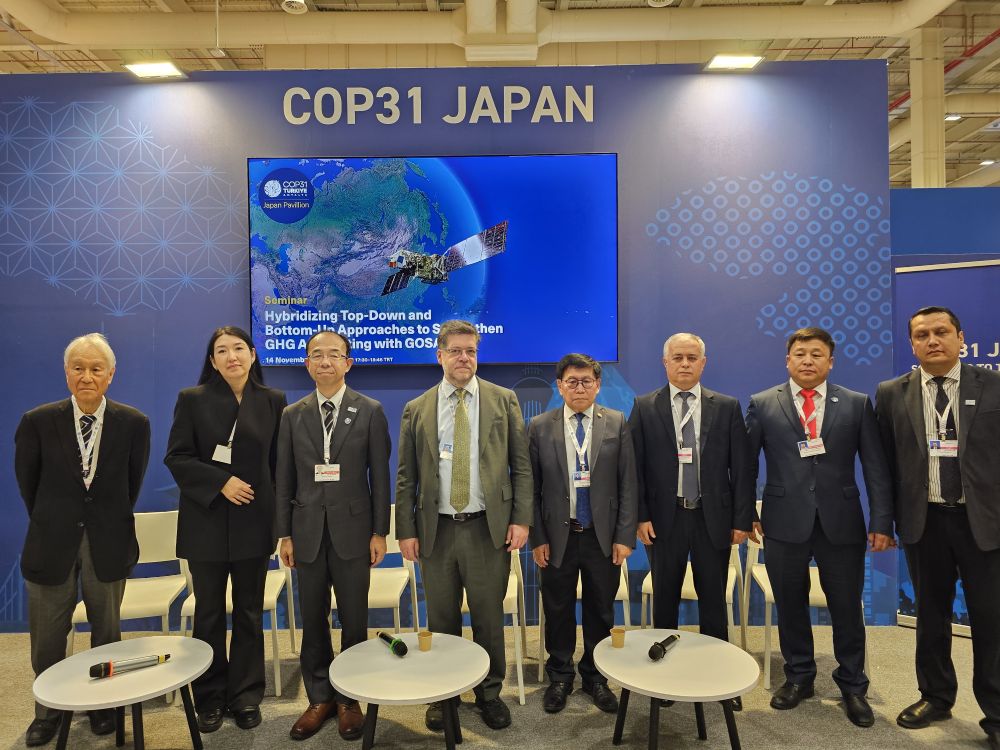
Panelists participating in the discussion
At the seminar, Mongolia and Uzbekistan announced their intention to incorporate the results of joint research with Chuo University into their Biennial Transparency Reports (BTRs) under the Paris Agreement — a world-first step toward embedding satellite-based verification of GHG emissions in the international reporting regime. Professor Watanabe also delivered an invited keynote at the Uzbekistan Pavilion on 13 November, and the team held bilateral consultations with counterpart agencies of Mongolia and five Central Asian countries as well as the GCF, agreeing to reflect research outcomes in forthcoming national reports, and discussed to launch new joint studies. In addition, the participants engaged in lively exchanges of views on national GHG accounting practices, the preparation of Biennial Transparency Reports (BTRs) under the Paris Agreement, trends in climate finance and carbon markets, and methodologies for measuring soil organic carbon. Through these discussions, the participants reached a shared recognition that approaches combining satellite data with ground-based observations can contribute substantially to ensuring the transparency of emission accounting and to enhancing the credibility of carbon credits.
Under a project commissioned by the Ministry of the Environment of Japan, Chuo University is leading the international standardization of satellite-based GHG accounting and will continue to contribute to enhancing the transparency of global climate action.
◇ COP31 JAPAN PAVILION (JPRSI: Japan Platform for Redesign: Sustainable Infrastructure)
Hybridizing Top-Down and Bottom-Up Approaches: Utilizing GOSAT for BTR Advancement

