
2026.11.11
News
[Faculty of Global Management] 15 Students Present Research at International Conference in Taiwan — The trip included a visit to semiconductor giant TSMC and business discussions with Taiwanese entrepreneurs —
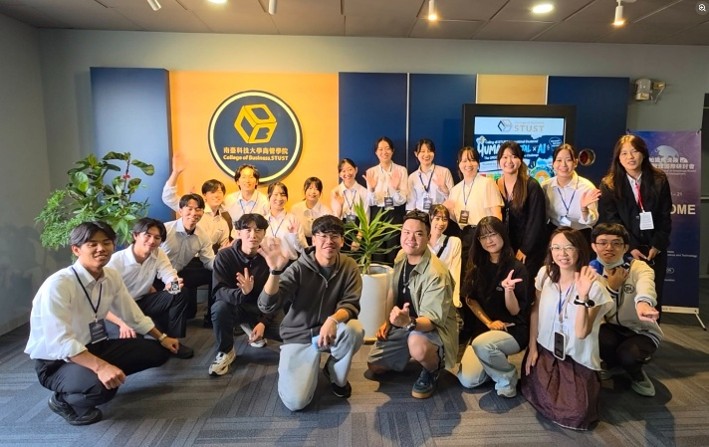
Group photo of students from both universities at Southern Taiwan University of Science and Technology
On October 20-21, 2026, 15 sixth-cohort students from the Faculty of Global Management, organized in four research groups, presented their accepted, peer-reviewed research papers at The 22nd International Conference on Knowledge-Based Economy and Global Management, hosted by Southern Taiwan University of Science and Technology in Tainan, Taiwan.
Prior to the conference, the students visited the Museum of Innovation of TSMC, the world's largest semiconductor foundry company, in Hsinchu. They also concluded their stay in Taiwan with a business discussion in Taipei with entrepreneur Fisher Lee, founder of DynaComware and currently founder of Dynalab Inc.
1. Research Presentations by Four Student Groups at the International Conference (Tainan)
At the international conference, the four student groups delivered presentations in English based on their original research papers:
1. Number of Options and Decision-Making Satisfaction
(Satsuki Takada, Yosuke Iijima, Yuto Taguchi, and Yui Shiraishi)
Investigated how the number of available options (3, 9, and 27) affects satisfaction with decision-making among 70 university students. Using Structural Equation Modeling (SEM), the group demonstrated that an increased number of choices can make evaluation criteria less clear, which in turn reduces decision-making satisfaction.
2. Changing Images of Disney Princesses Across Generations
(Marina Nakamura, Junna Inoue, and Yuka Warada)
Developed a web-based tool to analyze perceptions of Disney princesses across generations among 50 participants aged 18 to 50. Their findings revealed differences in character images across different eras and suggested that changes in personality traits tended to precede changes in storylines and visual appearance, particularly in characters like Belle and Rapunzel.
3. Tourist Expectations vs. Actual Experience
(Ryoma Kondo, Haruna Sugiyama, Hayato Okuma, Masami Sonoda, and Misato Igi)
Examined the impact of pre-visit expectations versus actual experiences among 144 tourists at Mt. Takao. Their analysis indicated that the gap between pre-visit expectations and actual experiences did not sufficiently explain overall satisfaction. Instead, tangible experience such as facilities, customer service, and dining options played a more significant role.
4. Time Perception Within Teams and Group Performance
(Ayana Sakurai, Taiga Yoshino, and Miyu Maeda)
Examined the relationship between differences in members' subjective perceptions of time and team performance through a group discussion experiment with 59 university students, using Pearson and Spearman correlation coefficients. The results indicated a trend where higher alignment in time perception correlates with better performance, though statistical robustness was affected by outliers.
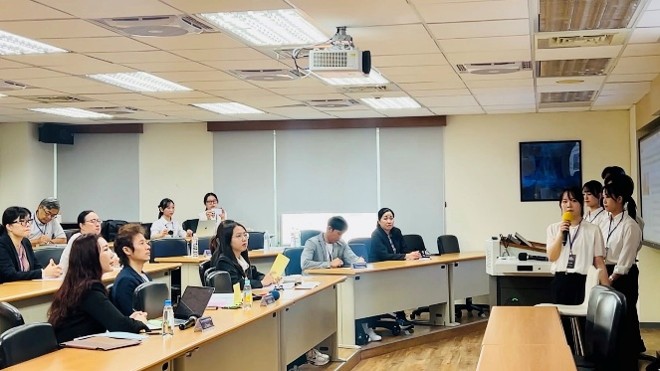
At the conference venue (Chuo University students presenting)
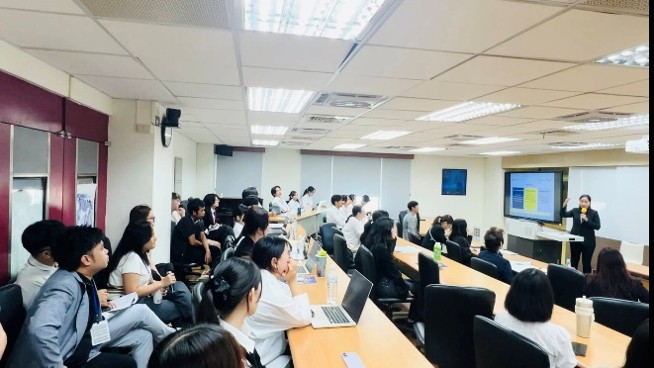
At the conference venue (Chuo University students listening to presentations in the back)
These projects covered a wide range of fields, including consumer behavior, culture and society, tourism studies, and organizational behavior. The students independently formulated research questions, collected data, conducted statistical analyses, drew conclusions, and prepared academic papers, demonstrating a high level of research initiative and capability.
2. Visit to TSMC's Museum of Innovation (Hsinchu)
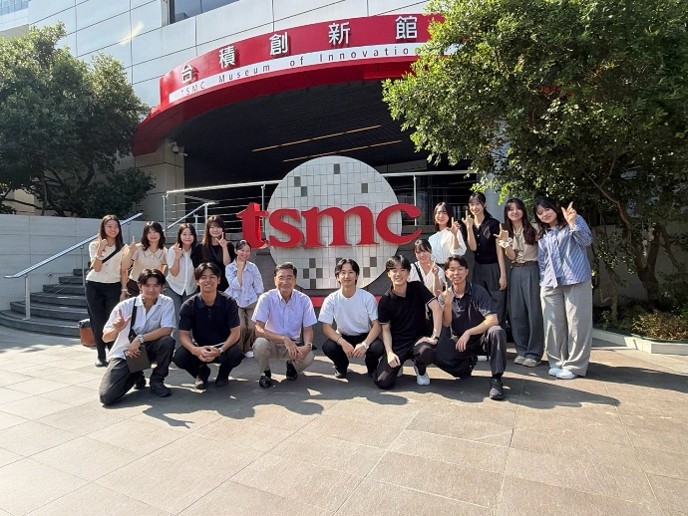
Group photo in front of TSMC
In Hsinchu, the students visited the Museum of Innovation operated by TSMC, a global leader in the semiconductor industry. This visit provided an opportunity to understand the technical mechanisms of semiconductors, which are rarely visible in everyday life, as well as their industrial importance.
TSMC has established a crucial position in the global semiconductor industry by developing the foundry business model, where semiconductor design and manufacturing are divided between separate companies. In addition to gaining a deeper understanding of advanced technologies, the students were encouraged to consider important strategic management questions, such as how technological innovation can be transformed into competitive advantage and how it shapes global industrial structures.
3. Business Discussions on an Innovative Service for Older Adults, "CornSoup" with Taiwanese Entrepreneur (Taipei)
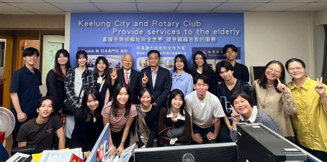
Group photo at Dynalab Inc. (Mr. Fisher Lee: 5th from left, back row)
In Taipei, the group met with Fisher Lee, a Stanford alumnus who founded DynaComware, a global font developer for major PC brands. Mr. Lee’s current venture, Dynalab Inc., is developing "CornSoup," an innovative platform that connects senior citizens with healthcare and social care services using home televisions and landline telephones.
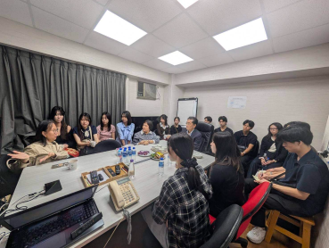
Discussion at Dynalab Inc.
During the visit, Mr. Fisher Lee and his team explained the business concept, and the students engaged in an interactive business discussion regarding topics such as entering new markets, user acceptance, and challenges toward service adoption. For the students, it was a valuable opportunity not only to learn about addressing the social issue of bridging the digital divide, but also to think about how to commercialize innovative technology and translate it into social value and competitive advantage.
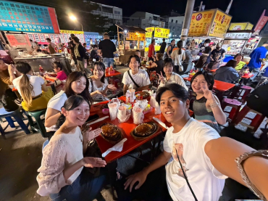
Social gathering at a night market with students from both universities
This trip to Taiwan provided a practical global education opportunity that bridged research, technology, and management by allowing students not only to present their academic research at an international conference, but also to experience technological innovation at a leading global company and directly engage in discussions with corporate executives.
The Faculty of Global Management will continue to actively promote distinctive educational programs that integrate academic research with practical international exchange, with the goal of nurturing individuals who can take on challenges on the global stage, share their research outcomes and ideas with the world, and create new value beyond national and disciplinary boundaries.
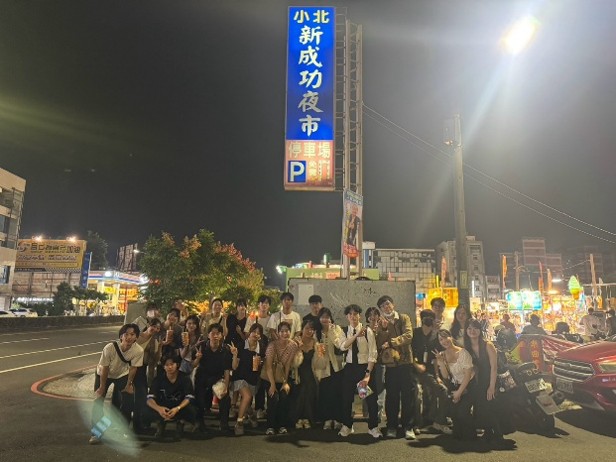
Social gathering at a night market with students from both universities

