2026.03.26
News
Faculty of Commerce Students Conduct Field Research on Historic Spaces, Museums, and Gugak in Seoul, South Korea
The Faculty of Commerce offers a distinctive global education program, ‘Global Fields Studies (GFS)’, conducted during year-long research seminars.
As part of the GFS activities, students from the ‘Global Fields Studies’ (Professor Soonsil Moon) visited Seoul, South Korea, from March 5, to March 8, 2026. During the visit, they conducted field research on historic spaces, museums, and Gugak (Korean traditional music) in the city—topics aligned with the students' seminar research themes.
*The travel expenses for this study trip were partially covered by the ‘Distinctive Faculty Education Aid’ provided by the Faculty of Commerce, Chuo University.
The Global Liberal Arts Seminar aims to develop students’ skills to collaborate with individuals from diverse linguistic and cultural backgrounds in the future. We believe this is achieved by deepening their understanding of global languages, history, and cultures and studying related businesses and social activities.
Study Report
Purpose of the Study Trip
In the Spring Semester, students read A Modern History of K-POP (Chikuma Shinsho) to study modern history with a focus on Korean musical history since the dawn of the modern era. Additionally, students conducted research on the regional characteristics of Korean food culture. In the Fall Semester, with the aim of delving deeper into Korean cultural history, the course focused on the history of Seoul and its urban development. This field research in Seoul was designed to reinforce and deepen a year’s worth of learning by visiting areas and museums that clearly showcase the transformations from the Joseon Dynasty to the modern era, and by experiencing Korean traditional music—which is difficult to hear live in Japan—firsthand.
Findings
The objective of this research was to confirm and deepen the students' understanding of Korean traditional music, food culture, and the cityscapes of Seoul—topics previously researched in class—through actual fieldwork. The itinerary was executed almost exactly as planned.
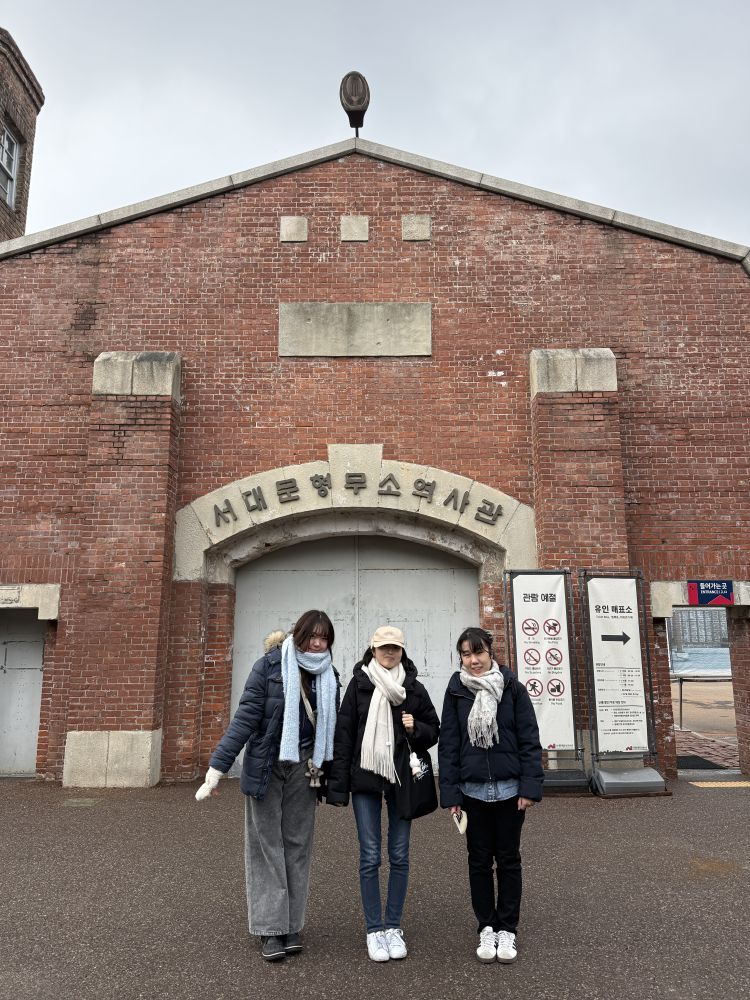
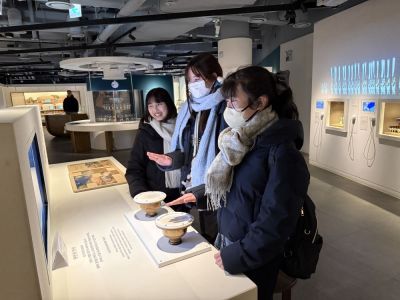
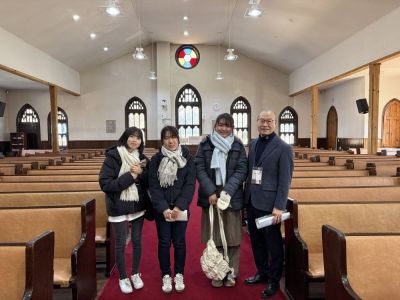
Regarding the cityscapes of Seoul, students explored how the city evolved from the Joseon Dynasty through the modern era to its current state. By examining exhibits at the Seoul Museum of History, they gained a deeper understanding of how the city changed due to modernization brought about by Western influence and Japanese colonial rule, and the subsequent path of development following liberation. Furthermore, the Seodaemun Prison History Hall provided a concrete example of how colonial-era architecture was preserved and repurposed by the Republic of Korea. Visits to Gyeongbokgung Palace and the National Palace Museum of Korea allowed students to confirm aspects of Joseon-era traditional culture through actual artifacts that could not be fully grasped through literature alone. Additionally, visits to Myeongdong Cathedral and Jeongdong Church—the respective centers of Catholicism and Protestantism in Korea—offered insights into the role of the church in Korean history.
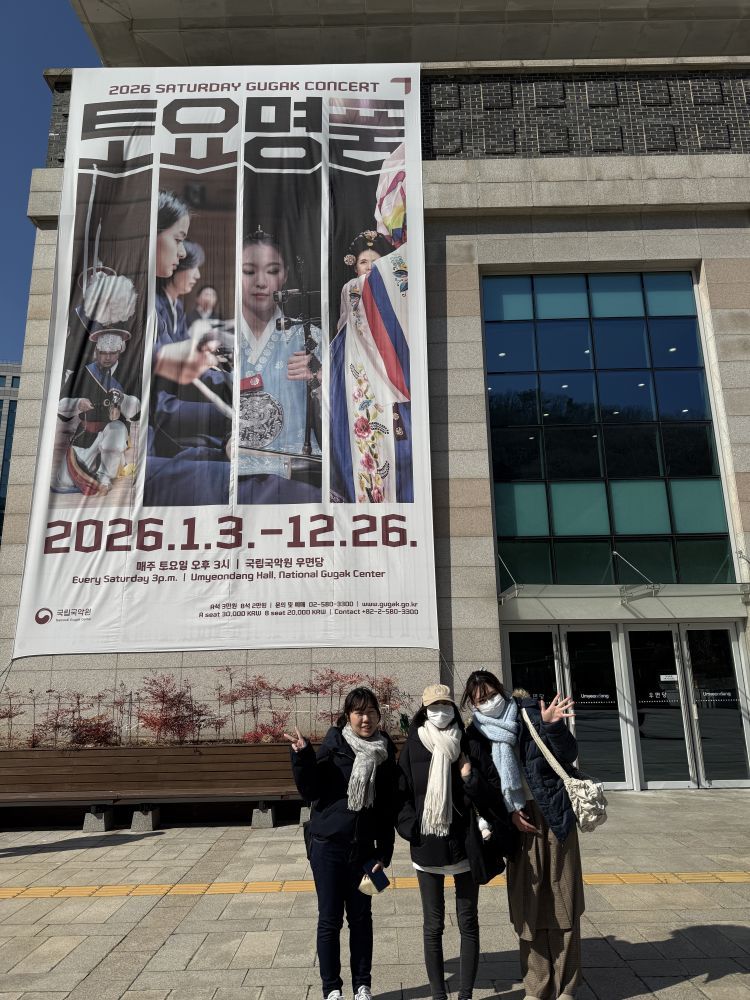
At the Seoul Museum of Korean Folk Music, students engaged visually and aurally with recordings and exhibits of songs closely tied to daily life from the Joseon era to the present (such as lullabies, work songs for housework, and agricultural songs). This was followed by a visit to the "Saturday Gugak Concert "—an introductory performance held every Saturday by the National Gugak Center. By experiencing live Gugak music, dance, and the traditional performing art of Pansori, students were also able to observe similarities with Japanese Gagaku.
In terms of food culture, students experienced the difference between reading about dishes or eating them in Japan versus trying them in their authentic setting. This included Andong Jjimdak (a dish featured in a research paper read in class), traditional medicinal cuisine (Yak-seon), herbal teas, Eobuk Jaengban(vegetable and beef hot pot), Naengmyeon (cold noodles), and Kong-guksu (noodles in soy milk broth).
In conclusion, this fieldwork enabled student to gain a deeper understanding and acquire new insights that cannot be obtained through literature or audiovisual materials alone, by experiencing firsthand what they had previously studied only in Japan.