
2026.01.01
News
2026 New Year’s Greeting from the President
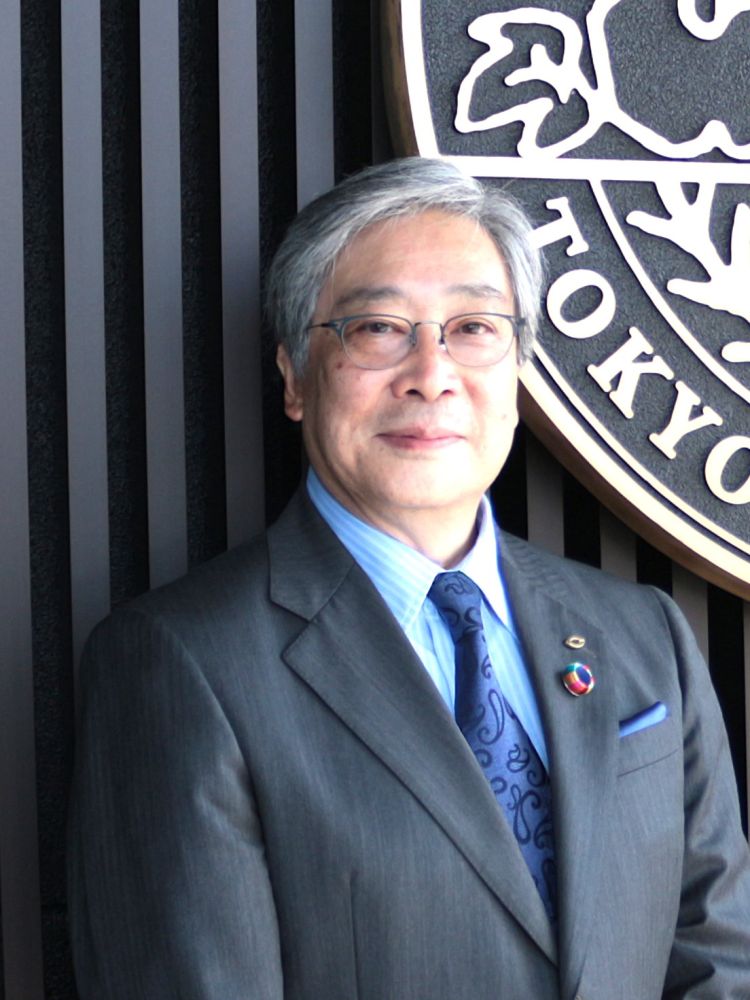
President, Hisashi Kawai
I would like to extend my warmest greetings as we begin 2026, and wish you all a very Happy New Year!
The year 2026 marks the starting point of our mid-to-long-term project plan, Chuo Vision 2035, which sets forth our goals for the ideal form of Chuo University over the coming decade. It is a critically important year for us, both for completing ongoing projects initiated by 2025 and for implementing new initiatives in a well-organized and effective manner.
Chuo University will celebrate its 150th anniversary in 2035. As we look ahead to this milestone, all faculty members and staff are committed to taking significant steps forward to further enhance the appeal and excellence of Chuo University.
On April 1, 2026, Chuo University will reorganize the current Faculty of Science and Engineering into three new faculties: the Faculty of Fundamental Science and Engineering, the Faculty of Science, Engineering and Society, and the Faculty of Advanced Science and Engineering, all of which will be located on the Korakuen Campus. In addition, we plan to newly establish two faculties, the Faculty of Data Science, Sports and Wellness (tentative name) and the Faculty of Agriculture and Information Technology (tentative name) in or after the academic year of 2027. Moreover, Chuo University is preparing to reorganize the Faculty of Economics into two departments from the current four: the Department of Economics (tentative name) and the Department of Society and Economics (tentative name). We will continue to advance our discussions to materialize these initiatives. Through these organizational reforms, we aim to meet the aspirations of students who seek to play active roles on the global stage. We also intend to expand our learning environment to include the fields of science, engineering and agriculture, while further clarifying the distinctive strengths of each academic area.
Furthermore, in order to respond to the needs of society, we would like to highlight our three priority initiatives for 2026, from the perspective of the core functions of higher education institutions: education, research, and social contribution.
First, regarding education, we will prepare a university-wide foundation for the effective use of generative AI, technologies that are rapidly advancing and increasingly pervasive, in our teaching and learning environments.
Second, with respect to research, we will launch initiatives that facilitate interdisciplinary research through achieving excellence in research and enhancing diversity. These efforts aim to connect our research outcomes to social implementation and create innovations.
Third, regarding social contributions, in addition to enhancing our intensive activities both in the regular curriculum and extracurricular education, we will develop a platform that offers local community members opportunities to pursue higher education. This will be achieved through collaboration with universities and governmental institutions, particularly those in the local region.
If I were to restate my commitment, it would be as follows;
Our forward-looking challenge is to become a ’more open Chuo University.’ We will realize this by bringing together the strengths of each faculty, graduate school, and research institution, thereby enhancing the university’s overall capabilities in education, research, and social contribution. Guided by the principles of providing high-quality education rooted in our long-standing traditions and accumulated experience, we will continue to pursue relentless innovation across all faculties, graduate schools, and research institutions.
One might imagine the relationship between the university and external society when hearing the phrase “a more open university.” However, the initiatives I mentioned above must be designed to create synergetic effects and complement the functions of each internal organization across existing institutional boundaries. In other words, it is inevitable to facilitate internal openness among our educational and research institutions. Chuo University should be the university where the synergies created through this internal openness can be shared outward with society. This is the essence of becoming a “more open Chuo University.” We will create an environment in which students can devote themselves to flexible learning and research that responds to social circumstances, and study in an atmosphere free from constraint.
As 2026 marks the first year of our next mid-to-long-term project plan, Chuo Vision 2035, we believe it is important that our faculty members and staff demonstrate our collaborative power in unleashing our creativity to shape a bright future for Chuo University, one that enriches the campus life of our students. I sincerely appreciate your continued understanding and support as we strive for constant progress. Wishing you a wonderful and fulfilling year ahead in 2026.
January 1st, 2026
Hisashi Kawai
President

