
2026.05.08
University as the Ideal Place to Deepen Learning and Discover New Perspectives ―Broadening Your Potential through Global Engagement and Interaction with Diverse People
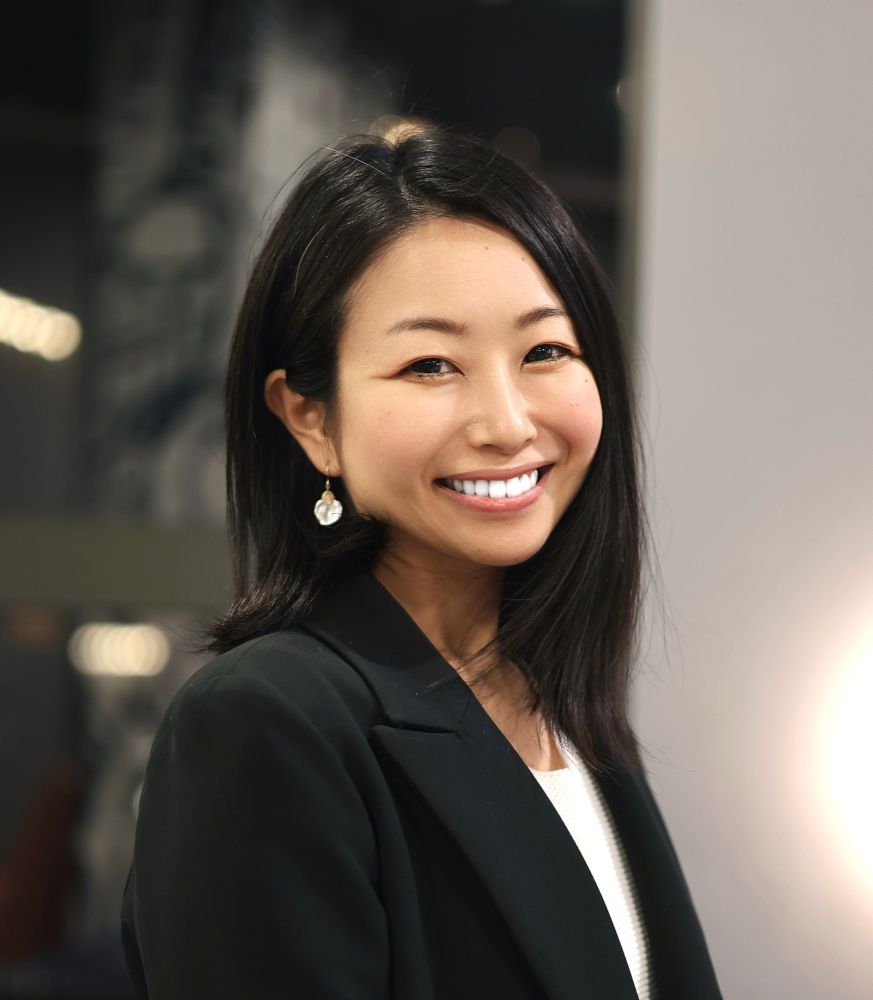
- Yuriko Onishi
- FRSA
Ministry of Education, Culture, Sports, Science and Technology
Graduated from the Department of International Economics, Faculty of Economics in 2010
After graduating from the Faculty of Economics at Chuo University, Ms. Onishi built an extensive career through positions at the Promotion and Mutual Aid Corporation for Private Schools of Japan and the Ministry of Education, Culture, Sports, Science and Technology (MEXT), including assignments in the Private Education Aid Division of the Higher Education Bureau, the Student and International Student Division, and the Office of the Counsellor for International Affairs. Currently, as a Long-term Overseas Research Fellow of the National Personnel Authority, she is bringing her expertise to the global stage while pursuing graduate studies in the United Kingdom, where she conducts research on education policy.
In this interview, Ms. Onishi reflects on her professional journey, her selection and appointment as a Fellow of the Royal Society of Arts (RSA) in October 2025—just three months after her arrival in the UK—and her experience of being invited to speak at the UK Parliament the following November. She also shares inspiring words of advice for her juniors at Chuo University.
My Roots
- You’ve recently taken on a new role abroad: what first sparked your interest in the world beyond Japan?
- The roots of my interest in overseas cultures trace back to my junior high school years. At that time, I went through a difficult period when I lost my motivation to attend school and came close to dropping out . Noticing this, my father said to me, “I hope you can find at least one thing you truly enjoy—something you can immerse yourself in and that helps you forget unpleasant things.”
The thing I found was English. Compared to today, opportunities to encounter people from other countries were quite limited when I was a child, but on several occasions, I happened to meet foreign visitors who greeted me with warm and genuine smiles. I vividly remember feeling frustrated because, although I wanted to say, “Thank you for coming to Japan," I could not say even that one simple phrase. That experience led to a strong determination to master English.
My father, believing that "it is better to have a partner at home to grow and study with," started learning English alongside me. We began attending English conversation classes together. Seeing how devoted I had become to my studies, when I was 15, he offered me the chance to participate in a homestay program in the United States, suggesting that I "go and see the world with my own eyes.
Living among people from diverse backgrounds in a different culture became a pivotal experience that profoundly shaped my values and influenced the direction of my life thereafter. I truly feel that this experience forms the foundation of who I am today. Even now, I am deeply grateful to my parents, who supported my journey by saving in so many other areas of our life back then.
Every Experience from My Student Years Has Led to Where I Am Today
- What led you to choose Chuo University and the Faculty of Economics?
- In recent years, many Japanese universities have shown a trend of moving back to city centers. However, I was instead strongly drawn to Chuo University’s tranquil environment and its spacious campus, which allow students to fully immerse themselves in their studies. Prestigious universities in the United States, such as Princeton University, are also often located in suburban rather than urban areas, and I believe one reason for this is their emphasis on fostering intellectual communities within a quiet setting.”
During high school, I spent a year in the United States as a Goodwill Ambassador for Rotary International. Through this experience, I developed a strong interest in cross-border flows of people, goods, and capital, as well as in development economics. This led me to pursue my studies at Chuo University, with a particular focus on the Faculty of Economics.
At Chuo University, students in the Faculty of Economics have opportunities to take courses in other faculties, and the University also offers a wide range of interdisciplinary programs, such as the FLP (Faculty-Linkage Program). I found it especially appealing that, within this environment, I could not only deepen my expertise in economics but also cultivate multifaceted perspectives through cross-disciplinary learning.
- What kind of student were you during your time at university?
- In my first year, I was occasionally overwhelmed by the energy and sheer number of students that come with being part of a large comprehensive university. However, in my second year, as I began participating in the FLP seminars, I gradually made close friends, and before long, I found myself looking forward to every single day on campus. The people I met at Chuo University were all so warm and sincere; even now, my closest friends are the ones I met during my time there.
My university life became even more fulfilling as I progressed through the years. From my second year onwards, I felt a growing desire to share the appeal of Chuo University with high school students considering their future paths. This led me to serve as a staff member and a campus tour guide for open campus events. I was also given the opportunity to share my student experiences through the university’s official blog and brochures.
Beyond the classroom, I gained valuable experience working part-time in the Faculty of Law office after my lectures. I am still deeply grateful for the many precious opportunities I had to learn, not only from textbooks but also through these hands-on activities.
- What was the primary focus of your activities during your university years?
- The cornerstone of my university experience was the FLP International Cooperation Seminar. I was a member from my second through fourth years, and my days were constantly filled with learning. Beyond the scheduled seminar days, we students organized voluntary "sub-seminars" amongst ourselves to deepen our discussions. Even during summer breaks, I was fully immersed in research, leading a busy yet incredibly fulfilling life.
My seminar group consisted of highly motivated students from every faculty except Science and Engineering and Letters. Being exposed to such a wide range of perspectives was constantly stimulating. In my third year, I planned and conducted field research in Vietnam, eventually distilling our findings into a research paper. Through these experiences, I moved beyond passive learning; I developed the ability to formulate my own questions, think critically, and take proactive action.
I also dedicated significant effort to studying Spanish as my second foreign language. I had first started learning Spanish during my high school study abroad program in the U.S., as a second language course was required, and I chose to continue those studies at Chuo. In today’s international society, proficiency in English is often taken as a baseline. By acquiring Spanish, I felt I was able to further expand my potential and reach.
- Are there any professors or classes that had a particularly strong influence on you or left a lasting impression?
- There were many professors whose guidance left a strong impression on me, but Professor Takuo Tanaka, who taught International Economics, was especially supportive. When I conducted research at Stanford University during my second year, he gave me the opportunity to speak about my experience at the beginning of his lecture in the large hall of Building 8. Being able to share my challenges in front of so many peers was incredibly encouraging and bolstered my confidence in my subsequent studies.
I also have fond memories of Lecturer Michiko Sakurai, who taught Spanish; Associate Professor Yoshifumi Katogi, who taught Advanced English; and Professor Peter Derek Massarella, who handled English courses in the Faculty of Economics. Lecturer Sakurai was deeply committed to helping me improve my Spanish. Thanks to her careful and dedicated instruction, I was able to meet the language proficiency requirements for a long-term study abroad program in Spain. Although I eventually learned that studying abroad for a full year would make it impossible to continue in the FLP International Cooperation Program—and therefore chose to remain in FLP—but Professor Sakurai’s wholehearted support of my language development has left a lasting impression on me to this day.
The classes taught by Professor Katogi and Professor Massarella were conducted in small-group settings, ensuring that every student had opportunities to speak. English was required at all times during class, allowing us to strengthen our language skills in a highly practical environment. I am still in touch with the classmates I studied alongside in those courses; we have built relationships in which we continue to inspire and encourage one another.
- Looking back, what experiences during your student years were most beneficial?
- I can categorize the most valuable experiences from my time as a student into the following five areas:
● Choosing courses based on my interests and intellectual curiosity, rather than on how easily credits could be earned. (I actively took classes offered by other faculties as well, which allowed me to engage with a wide range of fields beyond my own specialization.)
● Dedicating myself seriously to my second foreign language studies.
● Participating in the FLP Seminars.
● Becoming actively involved in university-wide initiatives, such as serving as a staff member for open campus events.
● Making meaningful use of long breaks by continuously challenging myself in areas that genuinely interested me.
Currently, as I pursue a master's degree in the United Kingdom as a Long-term Overseas Research Fellow, I truly feel that these five experiences paved the way for my current path. Accumulating a broad range of knowledge and experiences—not limited to specialized courses in the Faculty of Economics—proved to be a significant advantage when applying to graduate schools, and I was fortunate to receive offers of admission from all of the programs to which I applied. Furthermore, participating in an interdisciplinary Spanish-language course at my current graduate school has allowed me to meet highly motivated students from various departments, providing another valuable opportunity to broaden my perspective.
Additionally, because I spent my university long vacations traveling as a backpacker to approximately forty countries, I felt no hesitation at all about embarking on a long-term stay abroad this time. Although it has only been about seven months since I arrived, I have been blessed with many wonderful friends and people who feel like family, allowing me to enjoy a fulfilling life completely free from any sense of homesickness.
I strongly believe that the choices I made and the experiences I accumulated during my time at Chuo University continue to support my current challenges and make them even more rewarding. I am deeply grateful to my family and to everyone around me who has supported and encouraged me throughout my journey.
The Power of Embracing Differences, Imagination, and Insight into Core Issues
- Looking back at your professional career before moving to the UK, is there a particular experience that stands out to you?
- Among the various roles I held at the Ministry of Education, Culture, Sports, Science and Technology (MEXT), my work regarding Japanese Government (MEXT) Scholarship students was especially memorable. Given my own background of studying abroad, it was profoundly meaningful to be involved in a system that supports students aspiring to study overseas.
This was at the early stage of the COVID-19 pandemic, when entry into Japan had been suspended altogether. As a result, our work began with discussions with the Ministry of Health, Labour and Welfare on border control measures for international students.
After extensive and repeated deliberations, the entry of MEXT scholarship students was realized relatively early. However, upon arrival, they were required to undergo a period of quarantine at hotels near the airport. In order to check on their situation, I often traveled to these hotels after work. On-site, we faced numerous irregular and unforeseen situations.
Nevertheless, thanks to the cooperation of everyone involved, we successfully managed the intake of students who wished to study in Japan without any major incidents. When I received words of gratitude from students who had safely entered the country, I felt that all of our efforts had truly been worthwhile.
Through this experience, I was reminded that while national policies often focus on increasing the number of international students, what truly matters from a long-term perspective is whether each student—who chose Japan out of all the countries in the world—was able to enjoy a fulfilling study experience and return home satisfied.
International student programs make a significant contribution to building trust between nations, fostering mutual understanding, and developing long-term relationships. For this reason, I believe it is essential not only to establish appropriate systems for receiving students, but also to maintain an ongoing commitment to understanding different cultures and values, and to welcoming international students as valued members of our communities.
- Do you have any future goals or a vision you are currently pursuing?
- My experience with the American education system during my high school study abroad program profoundly impacted me, making me realize the immense value and potential of education. It was then that I began to envision a future career connected to this field. However, as I progressed in my professional journey, I gradually became aware of a different perspective—that higher education may also contribute to the reproduction of social inequality. This realization made me feel a growing sense of discomfort about simply carrying out the tasks directly in front of me. While achieving complete equality may be difficult, I felt strongly that I should avoid, as much as possible, being complicit in the reproduction of inequality.
After arriving in the UK, I discovered that the University of Oxford is focusing specifically on this issue, having established a dedicated center that gathers scholars from around the world to engage in related studies. In the coming academic year, I look forward to working alongside them to further explore this challenge, and to applying the insights gained there to my mission-driven work upon my return to Japan.
- What skills do you believe are essential for succeeding on a global stage?
- I believe that many of the challenges we face today cannot be solved without collaborating with our peers who share the same era. In such situations, insisting solely on one’s own opinion will never lead to a solution. I believe what is required instead are skills such as active listening to truly hear others, understanding the perspectives and values that lie behind their views, embracing differences, exercising imagination, and identifying the core of complex issues.
To cultivate these skills, I believe it is vital to step out of one’s comfortable "bubble" and proactively explore what is happening in the world today. Taking that initiative is what leads to the next step in one's journey.

The Maughan Library at King's College London
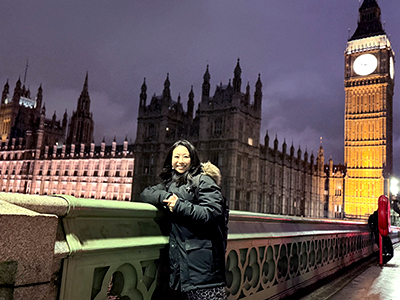
Big Ben from my commute to campus
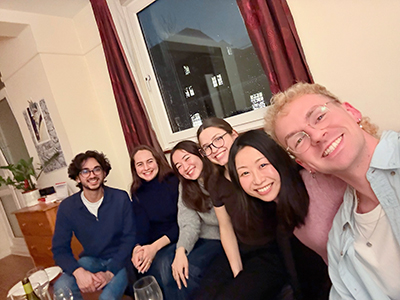
Home party with the Spanish class friends. We all have such different majors—there’s always something new to learn from them.
Insights Shared at the UK Parliament: The Current State and Challenges of UK Universities from an International Student's Perspective
- As a Long-term Overseas Research Fellow for the National Personnel Authority, what specific research are you currently pursuing at King’s College London (MA in Education, Policy and Society)?
- I am conducting research focused on how education policy should be shaped from the perspective of social justice.
The relationship between education policy and social inequality, as well as the gap between theories of justice and the realities of education policy, are themes that had already drawn my attention while engaged in policymaking at MEXT. For this reason, I feel both grateful and deeply fulfilled to have been given the opportunity to pursue research that embraces rather than ignores the sense of dissonance I felt during my professional career, transforming it into the very foundation of my studies.
- Could you tell us about the process that led to your appointment as a Fellow of the Royal Society of Arts (RSA)?
- When I applied to become a Long-term Overseas Research Fellow and underwent the selection process by MEXT and the National Personnel Authority, I recognized that one of the contributions I could make upon my return to Japan was the establishment of an international network by drawing on my own strengths. With this in mind, rather than waiting until after my arrival in the UK to begin my activities, I started reaching out even before my departure to individuals who could become key figures, proactively sharing my student experiences and core values in order to foster meaningful connections.
As a result of these efforts, I was recommended for appointment as a Fellow of the Royal Society of Arts* (FRSA) by an individual who had served for many years as a senior adviser to the UK Parliament.
* Founded in 1754 and headquartered in London, the Royal Society of Arts (RSA) is a prestigious UK learned society under the patronage of His Majesty King Charles III.
- What kinds of activities or qualities do you think were particularly valued in your selection as an RSA Fellow?
- One aspect I believe was valued is my consistent effort not to ignore the questions and sense of dissonance I have experienced throughout my student life and professional career. Rather than simply reproducing the status quo, I have consistently asked myself what I could do to contribute to a better society and have taken proactive action within my own capacity at each stage.
Equally important is the realization that these achievements were not accomplished by my efforts alone. As Professor Michael Sandel writes in his book, The Tyranny of Merit: What’s Become of the Common Good?, we must not become overconfident and assume that success is solely the result of our own effort or talent. We must remember that behind every success, there is always an element of luck and the support of others. I believe that maintaining such awareness and humility is indispensable for building relationships of trust with others. It was thanks to this perspective that I was able to forge strong bonds with many people here in the UK, which ultimately led to my election as an RSA Fellow.
- What perspectives or experiences do you believe are important for those aspiring to become RSA Fellows?
- Fellows of the Royal Society of Arts (FRSA) are individuals who are genuinely committed to driving social change. Therefore, I believe it is important to approach issues from a global perspective—for example, by considering what kind of society enables more people to live with dignity and well-being—and to steadily build toward a more collaborative, rather than competitive society by taking concrete actions one step at a time.
I did not necessarily set out with the specific goal of becoming a Fellow; rather, I was fortunate enough to be elected as a result of my ongoing activities. However, through this appointment, I have gained the opportunity to join a robust global network of Fellows from around the world. Since achieving social transformation requires collaborating and sharing wisdom with people from diverse backgrounds, I feel that being part of this Fellowship has significantly expanded the possibilities for my future endeavors.
- Could you share an overview of the speech you delivered at the UK Parliament in November 2025 and the core message you aimed to convey?
- The United Kingdom is a highly popular destination for many Japanese students. However, according to research by the Office for Students (OfS), approximately 40% of UK universities are currently operating at a financial deficit, and this figure is projected to exceed 70% within the next two years. Under such circumstances, universities have become increasingly desperate to secure international students, who pay higher tuition fees.
As I observed this situation, I became aware of several challenges. In many cases, universities are placing overwhelming emphasis on recruiting international students, while the campus-based support systems needed to adequately support them have not kept pace. Based on these observations from my own perspective as an international student, I was given the opportunity to deliver a 15-minute speech at the UK Parliament. To the best of my knowledge, there have been no previous cases in which someone studying abroad under the National Personnel Authority’s program was invited to speak at Parliament, and I feel extremely fortunate to have been granted such a rare and valuable opportunity.
It is understandable that financially struggling universities prioritize international recruitment to improve their situation. However, there are limits and significant downsides to viewing international students merely as commercial prospects or relying too heavily on them for financial stability. Through my speech, I hoped to provide an opportunity for the audience to reflect together on the true significance and essence of welcoming international students.
- Were there any responses from UK universities to your speech that particularly stood out to you?
- The audience that day brought together the key stakeholders who hold the future of UK higher education: Members of Parliament (MP), university leadership including Vice-Chancellors and faculty, and representatives from independent think tanks specializing in higher education policy.
Given that UK universities often rank highly in global university rankings, it seemed that many individuals had previously felt that maintaining the status quo was sufficient. However, through my speech, I received many encouraging comments, such as, “The issues highlighted from an international student’s perspective have provided important new insights,” and “We would like to use these reflections as a catalyst for UK universities to improve and evolve further.”
What impressed me even more was that many attendees approached me personally after the speech, saying, "I would love to hear more of your thoughts," or asking, "Could we meet again soon?" I was deeply moved by the way so many people chose not to let our encounter end that day, but instead took a proactive stance in nurturing and valuing the connection we had made.
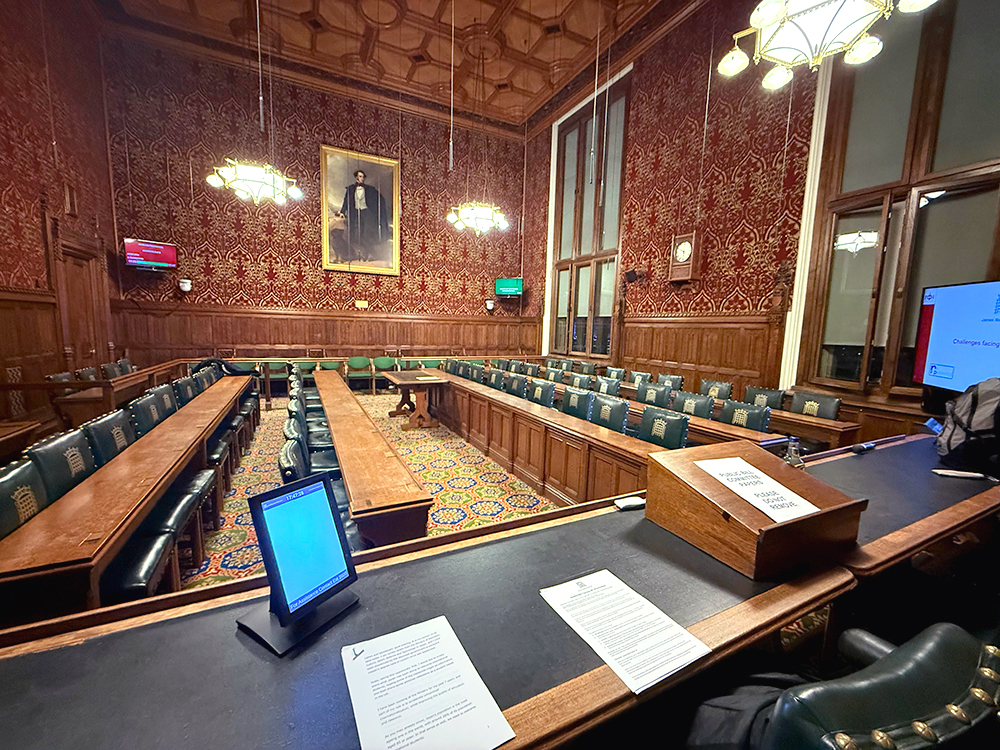
A room inside the Palace of Westminster
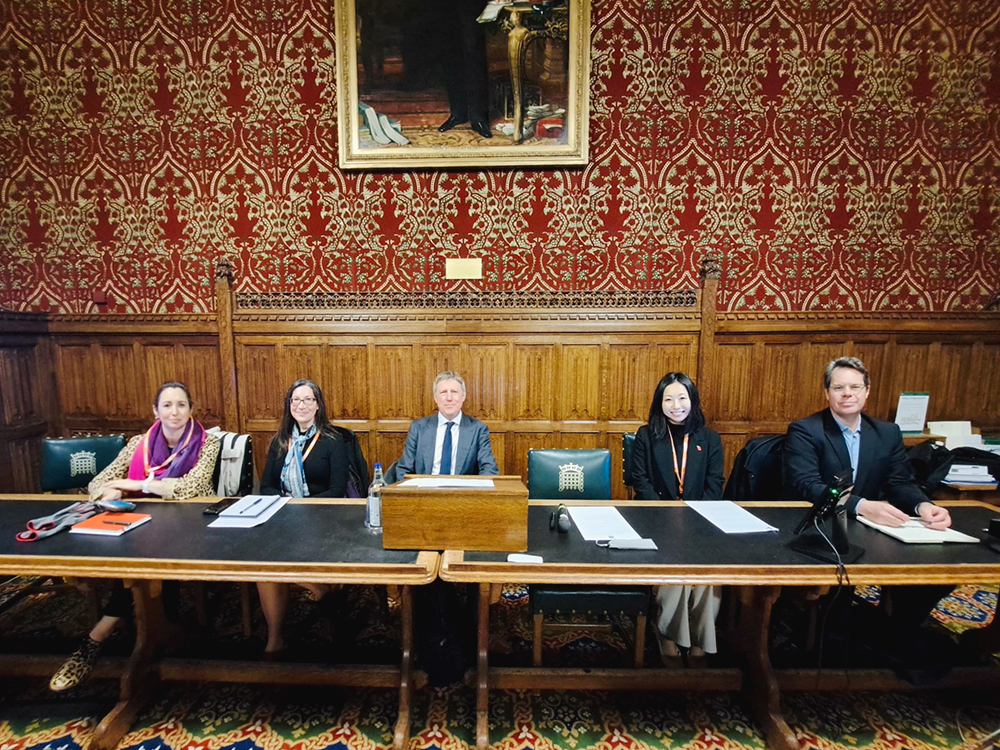
Sharing insights with MPs at the House of Commons before the speech
A Message to Students Aspiring to the Global Stage
I believe that a university is not a place where specific ideas are imposed upon students, but rather a place where each individual becomes aware of their own value, draws it out, and acquires the skills necessary to apply it meaningfully in society.
To become aware of your own core values, it is important not only to focus on earning credits, but also to actively challenge yourself in areas that spark your curiosity, to face honestly what one feels passionate about, and to continue pursuing them over time. Furthermore, moments in your daily life that feel unsettling or raise questions, I believe it is equally important to reflect carefully on why you feel that sense of discomfort.
A university, where scholars from a wide range of disciplines come together, is an ideal place to deepen learning and gain new perspectives. I encourage you to keep your eyes on the world, engage with a diverse range of people, and continue expanding your own potential. As one of the university’s alumni, I sincerely wish you all the very best in your endeavors.
Yuriko Onishi FRSA
Born in Tokyo. Graduated from the Faculty of Economics, Chuo University in 2010. After working at The Promotion and Mutual Aid Corporation for Private Schools of Japan and holding positions within the Ministry of Education, Culture, Sports, Science and Technology (MEXT)—including the Private Education Aid Division of the Higher Education Bureau, the Student and International Student Division, and the Office of the Counsellor for International Affairs—she is currently conducting research on education policy in the United Kingdom as a Long-term Overseas Research Fellow for the National Personnel Authority. Over a two-year period, she is scheduled to enroll in two graduate programs. She is currently enrolled in the MA in Education, Policy and Society program at King’s College London for her first year, and is scheduled to pursue further studies at the University of Oxford for her second year.

