
2026.03.04
The Biologization of Machines and the Mechanization of Living Organisms
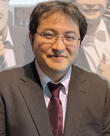
- Shotaro Yoshida
- Associate Professor, Faculty of Science and Engineering, Chuo University
Area of Specialization: Organic Bioelectronics
Blurring and converging of boundaries between living organisms and machines in future society
Living organisms are warm and soft. In contrast, machines are cold and rigid. This distinction may be accepted as common sense today. However, this is merely a distinction that arose from technological limitations. As such, it is not destined to persist indefinitely. It has been roughly 200 years since humans began to harness electricity. The semiconductor and electronics industries have made remarkable strides during that period. Even today, where research and development compete at the limits of nanotechnology in the cutting-edge fields of electronic and mechanical engineering, the use of cold and rigid materials has long been emphasized. Electronic components are vulnerable to heat and prone to failure if they are soft. This would make repair difficult. In the development of smart electronic devices such as smartphones, consumer appliances, robots, and artificial intelligence, reliance on coldness and rigidity has been practically unavoidable. In essence, this reliance has been a technological limitation.
However, examining these subjects with a broader perspective leads to a question--why are warm and soft human beings so remarkably intelligent? While not quite on par with a washing machine, humans can still perform tasks such as doing the laundry. Furthermore, when holding an infant, it is precisely this warmth and softness that makes the act appropriate. Modern molecular biology has revealed that the human body can be regarded as an intricately designed molecular machine composed of organic materials. Our advanced intelligence is realized through a biocomputational circuit formed by the cells and molecules of the brain. Physical movement is made possible through the control of muscle cells by molecular-scale micromachines. Energy is generated by the body's internal decomposition and synthesis systems by processing molecules taken in through food and respiration. The generated energy is then distributed and utilized throughout the body. Some people may feel uneasy about describing the human being as a molecular machine. Still, from an engineering perspective, the sophistication of this natural molecular machinery is astonishing and surpasses that of modern nanotechnology. The electronic devices which we have developed over the past two centuries are already facing questions of sustainability. On the other hand, living organisms have persisted sustainably for hundreds of millions of years. Inspired by this potential, researchers have begun efforts to develop electronic devices using organic and biological materials. One such field is "organic bioelectronics," which is my area of expertise.
One practical example in this field is the organic light-emitting diode (OLED). An OLED utilizes flexible organic materials and is already in use in foldable smartphones. Furthermore, researchers are nearing practical implementation of organic solar cells that are thin, flexible, and capable of being affixed to a wide range of surfaces. These organic solar cells may soon become a familiar part of everyday life. In this way, the long-held assumption that machines must be cold and rigid is gradually becoming outdated. In the future, warm and soft electronic devices are expected to become integrated into society. This will lead to a gradual fusion between the biological being and the mechanical being to the point where their boundaries grow indistinct. In the following section, by drawing on examples from my own research, I would like to offer a preliminary glimpse into the kind of society which may be born from this fusion.
Biologizing artificial intelligence and mechanizing biological intelligence
The rapid advancement of artificial intelligence (AI), particularly generative AI, is fundamentally transforming our daily lives. Personally, not a day goes by without using AI in my research or daily life. As we consider the future development of AI as an electronic technology, we cannot overlook the enormous amount of energy consumed by AI. In some cases, this consumption is reportedly equivalent to a nuclear power plant. Can we truly sustain the growing use of AI without depleting our natural resources? In this context, it is worth noting that human intelligence has operated with remarkably low energy consumption and has remained sustainable since ancient times.
As my readers may have already surmised, one possible approach to enabling current AI technologies to operate with the same low energy consumption as the human brain is to uncover the mechanisms of the organic, biocomputational circuits inherent to living organisms. These mechanisms could then be artificially reconstructed. My lab is developing technologies to reconstruct brain circuits by culturing living nerve cells on semiconductor microdevices. The key to this work lies in replicating the intricate organic microenvironment found in the human brain, and in constructing electronic and chemical interfaces that allow for the reading and writing of information to and from these circuits. On a daily basis, I work together with students at Chuo University for development of these emerging technologies.
Another crucial point is that deepening our understanding of human intelligence creates the possibility of enhancing and advancing biological intelligence through integration with electronic technologies. Our goal is to develop electronic technologies that can assist individuals facing challenges due to neurological disorders, mental illnesses, intellectual disabilities, and developmental disorders.
Biologizing robots and mechanizing human body
The next major technological challenge following the advancement of AI is said to be "embodiment"; that is, robotics. To perform tasks efficiently, the cold, rigid, and robust industrial robots currently operating in factories will remain essential. However, upon closer reflection, it is apparent that robots are largely absent from our everyday lives. The reason for this is obvious--even within factories, access to areas where robots operate is strictly controlled for safety reasons. Cold and rigid robots pose a significant risk of serious injury to soft and fragile human bodies.
In response to this problem, what if robots were designed to be soft and imbued with a sense of warmth? This idea lies at the heart of a new academic field known as soft robotics. In our research, we are using a wide range of organic materials to develop highly flexible robotic actuators which are safe for human beings. We firmly believe that robots will someday become capable of natural interaction with people in our everyday lives, thereby enriching our lives in meaningful ways.
Another important potential benefit of soft robots is their ability to be worn safely on the body. This concept is known as wearable robotics. These technologies are expected to become increasingly integrated into society in the form of power suits that augment human physical capabilities and devices designed for rehabilitation. Such technologies hold great promise for providing highly effective support to individuals living with physical disabilities.
Conclusion: Will society become biologized as technology advances?
As I introduced above, we envision a future in which living organisms and machines are integrated. This vision is being brought closer to reality by continued advancements in research on electronic devices that utilize organic and biological materials. In such a future, electronic devices will be embedded within sustainable energy circulation systems akin to those of living organisms. These integrated devices may take on the task of carrying out planned production activities using limited natural resources. People may eventually begin wearing electronic devices at all times to augment their intelligence, health, and physical abilities, all while living within the constraints of sustainable resource consumption. In this way, living organisms and machines will evolve and become fully fused within an optimized and sustainable natural system on Earth. In such a future, in what specific way will society mature?
One possibility is that humans will become indistinguishable from electronic devices, and will once again share the household and intellectual tasks previously delegated to machines. This could herald the end of unrestrained consumption and conflict, eventually leading to a return to an ancient form of society in which limited, renewable resources were circulated sustainably within the Earth's systems. Alternatively, we may witness a phenomenal leap toward a pinnacle of intelligence. This would enable the instantaneous regeneration of consumed resources and usher in a new form of happiness found within unbounded desires.
Personally, I have an optimistic view of the future. I believe it is possible for humanity to preserve its biological diversity while using the power of electronic devices to compensate for individual traits that may lead to social disadvantage. Without excessively inflating human desire, we can efficiently circulate limited resources and build a more peaceful society. In other worlds, I believe that society may undergo a form of biological evolution similar to how living organisms have evolved through adaptation to the Earth's environment.
Shotaro Yoshida/Associate Professor, Faculty of Science and Engineering, Chuo University
Area of Specialization: Organic Bioelectronics
Shotaro Yoshida was born in Oita Prefecture in 1988. In 2011, he graduated from the Department of Information and Communication Engineering in the Faculty of Engineering, the University of Tokyo. In 2013, he completed the Master’s Program in mechano-informatics in the Graduate School of Information Science and Technology, the University of Tokyo. In 2016, he completed the Doctoral Program in the same course. He holds a Ph.D. in information science and technology. After serving as a JSPS Research Fellow for Young Scientists (DC1), a Specially-appointed Researcher at the Institute of Industrial Science of the University of Tokyo, and Assistant Professor in the Graduate School of Engineering, Tohoku University, he was appointed as Assistant Professor in the Department of Electrical, Electronic, and Communication Engineering of the Faculty of Science and Engineering, Chuo University in 2020 and has served as head of the Organic and Bioelectronic Engineering Laboratory since then. He has held his current position since 2025.
His research focuses on developing technologies that eliminate the boundary between living organisms and electronic devices. More specifically, he is working to create electronic devices that are as soft as living organisms, that utilize living organisms as materials, and that function in direct fusion with living organisms.
Laboratory homepage: https://yoshidalab.r.chuo-u.ac.jp

