
Eventイベント
研究
2026年度 国際講演会『持続可能な 発展に関する教育・研究を中心とし た日・ベナン交流』開催のお知らせ
- 日程
- 2026年7月15日(水) 17:00~19:30
- 場所
- 後楽園キャンパス 3号館14階、セミナールームA&B、ラーニングコモンズ・成果展示スペース(〒112-8551 東京都文京区春日1-13-27)
- 日程
- 2026年7月15日(水) 17:00~19:30
- 場所
- 後楽園キャンパス 3号館14階、セミナールームA&B、ラーニングコモンズ・成果展示スペース(〒112-8551 東京都文京区春日1-13-27)
- 講演者
開会の辞:Hotes Stefan(理工学術院教授)
歓迎の辞:庄司 裕子(理工学術院長)
日・ベナン両国の学術・外交関係者による教育・研究セッション
Mr. Mahouton Mathieu Hounkanrin(駐日ベナン共和国大使館)
Prof. Dr. Nelly Kelome(アボメ・カラヴィ大学)
三笘 善治 教授(理工学術院 教授)
Prof. Dr. Achille Assogbadjo(アボメ・カラヴィ大学)
Prof. Dr. Flora Chadare(ベナン国立農業大学)
Dr. Juliano Houndonougbo(アボメ・カラヴィ大学)
Prof. Dr. Larry Lopez & Dr. Hervé Gonroudobou(山形大学)
閉会の辞:西川 可穂子 (副学長・商学部教授)
- 内容
中央大学が主催し、駐日ベナン共和国大使館が共催する国際講演会『持続可能な発展に関する教育・研究を中心とした日・ベナン交流 』(Education and Research for Sustainable Development - Extending Opportunities
for Collaboration between Japan and Benin) を開催します。
中央大学は2021年9月に駐日ベナン共和国大使館とのMOU(Memorandum of Understanding:覚書)を締結し、教育・研究分野における交流を推進してきました。
本講演会では、アボメ・カラヴィ大学およびベナン国立農業大学から研究者を招き、気候変動、スマート農業、環境保全など、持続可能な発展に関する最新の教育・研究成果を紹介します。また、日本とベナンの学術・外交関係者による意見交換を通じて、今後の教育・研究連携の可能性について議論を深めます。
本講演会は、中央大学における全学的な国際交流の発展や、国内外の大学・研究機関との連携強化について考える貴重な機会となります。多くの皆さまのご参加をお待ちしております。言語:英語
実施方法:対面およびオンラインのハイフレックス
※オンラインでのご参加を希望の際は、申し込みフォームの備考欄にご記入ください。詳細は、こちらのPDFをご覧ください。
- 参加費
無料
- 参加手続き
7月13日(月)までに下記のフォームからお申し込みください。
- 企画実施名義
代表者:Hotes Stefan(理工学術院教授)
西アフリカ・ベナン共和国アボメカラビ大学の概要
アボメカラビ大学の前身である「ダホメ大学」(Université du Dahomey)は、1970年8月21日にベナン共和国南部のカラヴィ市に設立された。初年度の入学者数は350人だったが、在学者数はその後順調に増え、1975年までに1896人になった。この年に大学名は「ベナン大学」(Université Nationale du Bénin)へ変更され、2001年に現在の名前「アボメイ・カラヴィ大学」(アボメカラビ大学、Université d’Abomey-Calavi)へと改称された。大学はその後も成長を続け、在学者数は6万7千人以上にまで伸び、ベナン最大の大学である。
アボメカラビ大学のビジョンは、スキルの習得を促進し、アントレプレナーシップとイノベーションを育み、発展の原動力となる学術的卓越性の拠点として社会に貢献することである。教育の質、研究の社会的有用性および人的資本開発における役割が、地域および国際レベルで高く評価されることを目指している。
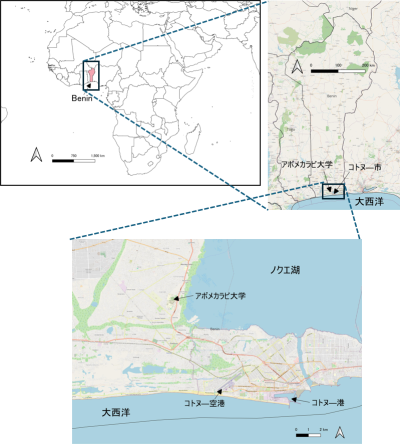
図1 ベナン共和国やアボメカラビ大学の位置
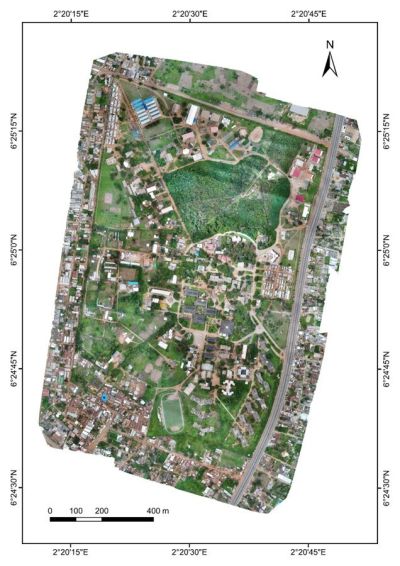
図2 アボメカラビ大学キャンパスのドローン画像
ベナンは西アフリカのフランス語圏の国の一つで、教育制度はフランスのモデルに基づいている。学部は3年間の学士課程(licence)を修了したら、2年間の修士課程(master)の入学試験が受けられる。修士号を取得したら、博士学院(école doctorale)に進学できるようになる。アボメカラビ大学(UAC)は総合大学で、28の学部(école、faculté)やセンター(centre)、研究所(institut)を有し、420の教育プログラム(formation)を提供している。主な教育・研究分野は、健康科学や科学技術、農業科学、法学・政治学、経済・経営学、文学・言語・芸術、人文科学・社会科学である。博士課程における教育は、9つの博士学院で行われている。幅広い研究活動は、64の研究室(laboratoire)や研究ユニット(unité)、そして3つの講座(chaire)において展開されている。
在籍学生のうち、女子学生の割合は約43%、留学生は1,100人あまりである。学部生は約85%、修士課程の大学院生は約12%、博士課程の学生は約3%を占めている。教職員は非正規の教員を含めて合計約1950人で、そのうち888名が正規教員(教員1人あたり学生73人の比率)であり、事務職員や技術院、支援スタッフは892人である。
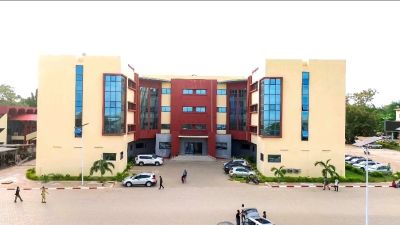
図3 大学の事務棟
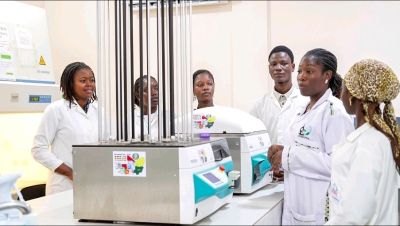
図4 理工系の教育・研究において、女性が多く活躍している
アボメカラビ大学は、あらゆるレベルにおいてジェンダーおよびインクルージョンを重視し、公平性の尊重を掲げている。大学にジェンダー・オブザーバトリーを設立し、高等教育におけるジェンダー政策文書を策定・普及し、戦略的かつ効果的なアプローチを探るために、インクルージョンやジェンダーに関する数多くの調査の実施している。これらの取り組みには、大学の運営機関全体が取り組んでいる。2015年以降、アボメカラビ大学は「障がいのある学生のための研究・教育支援センター(CRAPEH)」を設立した。同センターの使命は、障がいのある学生が自らの可能性を最大限に発揮できるよう、その教育・研修を支援することである。これらの活動は、2017年以降国際交流にも展開してきた。支援制度の一環として、経済的・社会的に脆弱な立場にある若者を対象とした奨学金プログラムを運営し、障がい者、難民、および国内避難民に対する割り当て枠が定められている。また、学生向けに相談・心理支援サービスも提供されている。
アボメカラビ大学は国際協力に積極的に取り組んでおり、各学部・学科を通じて数多くの国際プロジェクトや学生交流プロジェクトを実施してきた。こうした取り組みには、欧州の機関との教育・研究協力のほか、アフリカにおける農業、気候、持続可能な開発に関連する様々な分野での南南協力などが含まれている。
近年、日本との協力関係が拡大しており、中央大学以外に京都大学やJICAなどのパートナーシップを通じて、学術交流、能力開発、共同研究の取り組みに重点を置いている。中央大学との交流が始まったのは、駐日ベナン大使館と中央大学理工学部との間につながりができたのがきっかけだった。2019年に、当時の樫山理工学部長が当時のベナン大使を知り合い、同年10月のインターナショナルウィークの際に大使を後楽園キャンパスに招き、講演していただいた。2020年2月に、理工学部(現在の社会理工学部)人間総合理工学科の山村寛教授とホーテス・シュテファン教授が駐日ベナン大使館のスタッフの協力を得て、アボメカラビ大学を訪問した。その後コロナ禍が始まり、しばらくの間交流がオンラインに限られたが、2022年10月にアボメカラビ大学農学部応用生態学研究室のアソグバジョ教授(Prof. Dr. Achille Assogbadjo)を外国人研究者受け入れ制度で招くことができた。続いて、2023年11月からウンドヌグボ博士(Dr. Juliano Houndonougbo)が学術振興会-国連大学のポスドク研究員として二年間景観科学研究室に籍を置くことになった。2023年にアソグバジョ先生と同研究室のイドフ博士(Dr. Rodrigue Idohou)と共に申請した研究クラスター形成プロジェクトが採択され、アボメカラビ大学を訪問し、中央大学に来ていただき、共同研究の準備を進めた。2024年5月に、アソグバジョ先生とイドフ先生が来日していた間、駐日ベナン大使館と共同で持続可能な発展に関するワークショップを開いた。
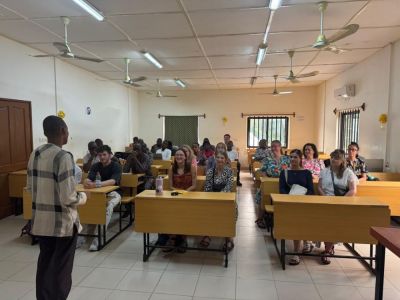
図5 国際交流が盛んである
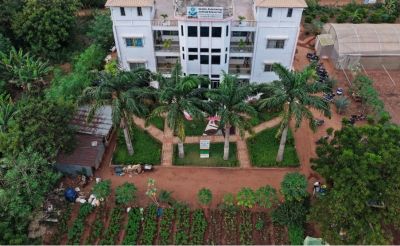
図6 キャンパス内の実験棟や実験圃場
2026年度から、社会理工学部人間総合理工学科の三苫好治教授のSICORP (Strategic International Collaborative Research Program) - Africa-Japan Coreプロジェクト「アフリカにおける持続可能性の課題:ナノカルシウムを用いた汚染土壌の浄化およびエコ肥料・高強度コンクリートへのリサイクル」には、アソグバジョ先生とアボメカラビ大学の副学長を務めているケロメ先生(Prof. Dr. Nelly Kelome)が携わっていて、ベナンの農村地域における農薬によって汚染された土壌に関するデータ収集の準備を進めている。
ケロメ先生とアソグバジョ先生は2026年7月6日~20日中央大学を訪問する予定である。ベナン国立農業大学栄養学部学部長のシャダレ教授(Prof. Dr. Flora Cadare)も同行する予定である。

図7 卒業式に向かってキャンパスを歩く教員(ケロメ副学長は右から5人目)
Brief description of the University of Abomey-Calavi
Created on August 21st 1970 under the name of University of Dahomey, it became University of Benin in 1975 and was later renamed the University of Abomey-Calavi in 2001. The University of Abomey-Calavi’s vision is to Position the University of Abomey-Calavi (UAC) as a center of academic excellence that facilitates access to skills, fosters entrepreneurship and innovation, and serves as a driver of development, recognized at the regional and international levels for the quality of its training, the relevance of its research, and its role in human capital developmen. The University of Abomey-Calavi (UAC) comprises seven (07) university centers each housing a variable number of faculties, schools or institutes, and chairs. Main fields of study and research at the UAC are health science, science and technology, agricultural science, law and political science, economic and management sciences, literature, languages and arts, humanities and social Sciences, humanities and Social Sciences.
Keys statistics:
61110 students enrolled in 2021, 43,3% of women, 1147 international students, with 85,3% of undergraduate, 12,1% of graduate and 2,6% of doctorate students. When it comes to the staff members, the academic staff is made of 944 teachers including 888 statutory teachers (ratio of 1 teacher for 73 students) and 892 administrative, technical and support staff.
Pathnerships
Furthermore, UAC is actively engaged in international cooperation and has implemented numerous international and mobility projects through its schools and faculties. These initiatives include, among others, educational and research collaborations with European institutions, as well as South–South partnerships across various fields related to agriculture, climate, and sustainable development in Africa. In recent years, cooperation with Japan has significantly increased, notably through partnerships with institutions such as Chuo University, Kyoto University, and JICA, focusing on academic exchange, capacity building, and joint research initiatives.
Spefically With CHUO....
- Ongoing colaboration on a recently awarded SICORP-AJ-Core on the topic : "Sustainability Challenge in Africa : Purification of Contaminated Soil Using
Nano-Calcium and Its Recycling into Eco-Fertilizer and High-Strength
Concrete". In that frame UAC is preparing for the data collection on polluted soils across regions in Benin - In 2024 and 2025, Two tentative of submission of a joint proposal to the SATREPS call between Japanese Universities (Chuo and Yamagata University) and Benin Universities (National University of Agriculture-University of Abomey-Calavi)
- In 2024 : submission of a proposal to a seed money programme of Chuo University. This was approved, with available funding for a trip to Benin by Prof Stefan HOTES. During the visit at UAC, several data were colected using the drone in mangroves areas. For the visit to Japan in May 2024, two researchers at UAC (Dr Rodrigue IDOHOU & Prof Achille ASSOGBADJO) were involved. There, a small symposium was organized at Chuo University in Tokyo.
- Mr. Aurel Babatoundé Fridolin HANSINON, postgraduate candidate, applying for the MEXT Scholarship 2026, funded by the Government of Japan, under the academic partnership framework between Chuo University and the University of Abomey-Calavi (UAC).
- The University of Abomey-Calavi (UAC) has maintained an active and productive academic collaboration with Chuo University for more than five years supported by a Memorandum of Understanding (MoU). This cooperation particularly involves the Faculty of Agronomic Sciences (FSA), the National Institute of Water (INR), and the Polytechnic School of Abomey-Calavi (EPAC), and has contributed significantly to strengthening research capacity, staff exchanges, and joint supervision initiatives between both institutions.
- A strong example of this collaboration is the co-supervision of doctoral research between Prof. Stefan Hôtes (Chuo University) and Prof. Achille Assogbadjo (UAC), which has already resulted in more than five jointly authored scientific publications. These outcomes clearly demonstrate the effectiveness, continuity, and scientific relevance of the partnership, and provide a solid institutional framework supporting collaboration between both institutions.
- In 2023, Juliano HOUNDONOUGBO a PhD trained at Unievrsity of Abomey-Calavi has been awarded a Post Doc position at the University of Chuo where he is currently pursuing his PostDoc. This collaboration yielded a recently published paper.
As regards the gender and inclusion strategy, the University of Abomey-Calavi is an inclusive university concerned with respect for equity and consideration of the gender aspect at all levels.
Indeed, the establishment of the UAC GENDER Observatory, the development and popularization of a gender policy document in higher education, the carrying out of numerous studies on inclusion and gender in view of a better strategic approach are all actions undertaken by the governing bodies of the university. In addition, since 2015 the University has created a Center for Research and Educational Support for Students with Disabilities (CRAPEH), whose mission is to support students with disabilities in their training to develop their full potential. Service of International Cooperation, the Division in charge of mobility has proven experience in the management of cross-cutting aspects such as gender and inclusion, since since 2017, the service has been involved in the management of a scholarship program specifically dedicated to young people who are economically and socially vulnerable and on which quotas are clearly defined for people with disabilities and to refugees and displaced persons A listening and psychological support service is available for students.
