
On June 26th, Dr Ritesh Jain from the University of Auckland in New Zealand delivered a special online lecture titled “From Humans to Avatars: The Story of Virtual Influencers.” This lecture was based on his PhD research and published academic articles. It was delivered as part of the Seminar 2 course taught by Assistant Professor Toyohiko Sugimoto at GLOMAC.
Dr Jain works as a Professional Teaching Fellow at the Department of Marketing, The University of Auckland Business School, Auckland New Zealand. He earned his Ph.D. in Marketing from Queensland University of Technology (QUT) in 2025. He has over 21 years of practical experience, having worked in the education sector marketing, education leadership, teaching, and research across multiple countries, including India, Australia, and New Zealand. His research has been published in leading academic journals in marketing and communication research, such as the International Journal of Consumer Studies, Sustainability, and Journal of Creative Communications. Additionally, he is an enthusiastic contributor to society, engaging in various
volunteer activities, including Vinnies in Australia and the New Zealand Red Cross.
In his presentation, Dr Jain explained the background and concept of virtual influencers in academic research and introduced his mixed-method research, which aims to investigate how these influencers could potentially shape our attitudes and behavioural intentions in society, drawing on the narrative transportation theory.
Specifically, Dr Jain discussed how the fictional nature of virtual influencers may provide brands with greater flexibility in developing narratives that are relatable, inspiring, and capable of evolving over time. He also discussed how such storytelling may strengthen consumer engagement through narrative transportation. Lastly, he emphasised that the application of virtual influencers is expected to be beneficial in areas such as sustainability and consumer well-being, highlighting the rich potential for future research.
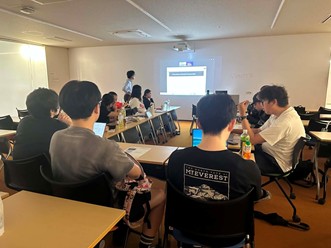
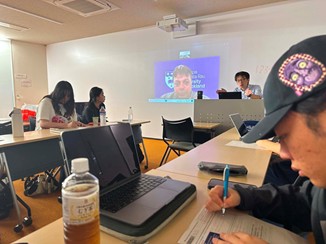
During the seminar, students demonstrated high levels of engagement throughout the lecture. In Seminar 1, they learned about research methods, and in Seminar 2, they began to explore their own research topics. This guest lecturer provided a valuable opportunity for them to apply their knowledge of research methods and analyse Dr Jain’s research (such as research design, sampling methods, and data collection techniques) and receive guidance on how to find interesting research ideas. After his presentation, students actively asked questions, which included general inquiries and specific questions about his research, such as:
“How can we effectively find an interesting research topic?”
“I have concerns about our future society, particularly with the emergence of AI influencers. What are the implications of such a societal change?”
“What are the differences between applied research and academic research?”
“Which topics would be valuable to explore in the area of virtual influencer marketing?”
“What was the total cost of completing a Ph.D. research project?”
This guest speech was truly a valuable opportunity. It offered GLOMAC students a chance to improve their research knowledge and academic communication skills in English, but also to gain insights that could help them find their research ideas.
