
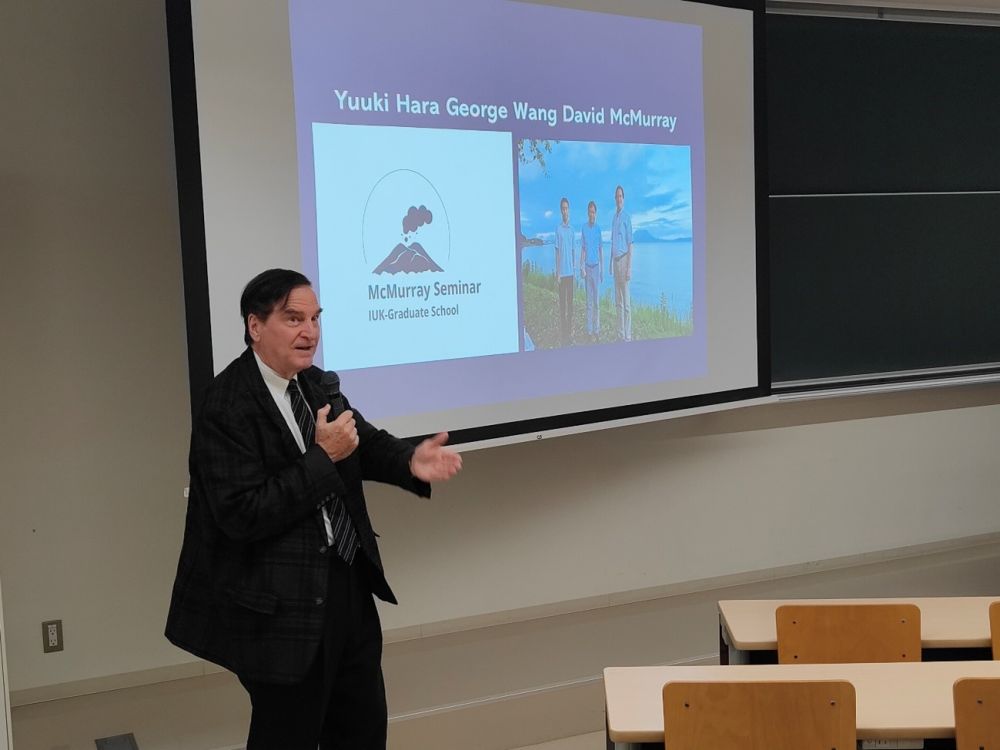
Professor David McMurray came to GLOMAC once again to give a guest lecture during the Introductory Economics class (instructor: George Wang).
Professor David McMurray is a distinguished professor of intercultural studies at the International University of Kagoshima (IUK), where he specializes in Business English, Global English, and International Business. He also directs overseas internship programs in Taipei and Kaohsiung, supervises MA theses in hospitality, and teaches English education to Ph.D. candidates. With an extensive background in finance—including service as CFO of the Canada Ports Corporation and Director of Finance for several institutions in Ottawa, Toronto, and Taipei—he brings a global, interdisciplinary perspective to his academic work. An accomplished geopolitical strategist and renowned haiku scholar, Professor McMurray has authored 15 books and contributes a weekly column to the Asahi Shimbun. He has also served as a judge for haiku competitions organized by the Ministry of Foreign Affairs, Itoen Tea Company, and a number of Japanese universities.
The speech introduced migration economics as a central issue for first-year economics students at Chuo University, emphasizing its relevance to Japan’s future. It began by outlining Japan’s demographic challenges—an aging population and shortages of young labor—which have prompted manufacturers to rely on foreign workers. However, the depreciation of the yen, rising import costs, and shifts in global trade (including U.S. tariffs) have reduced Japan’s attractiveness to migrant labor and encouraged Japanese firms to relocate production overseas. These economic pressures form the foundation for understanding migration through concepts such as push–pull factors, weak currency effects, and trade policy.

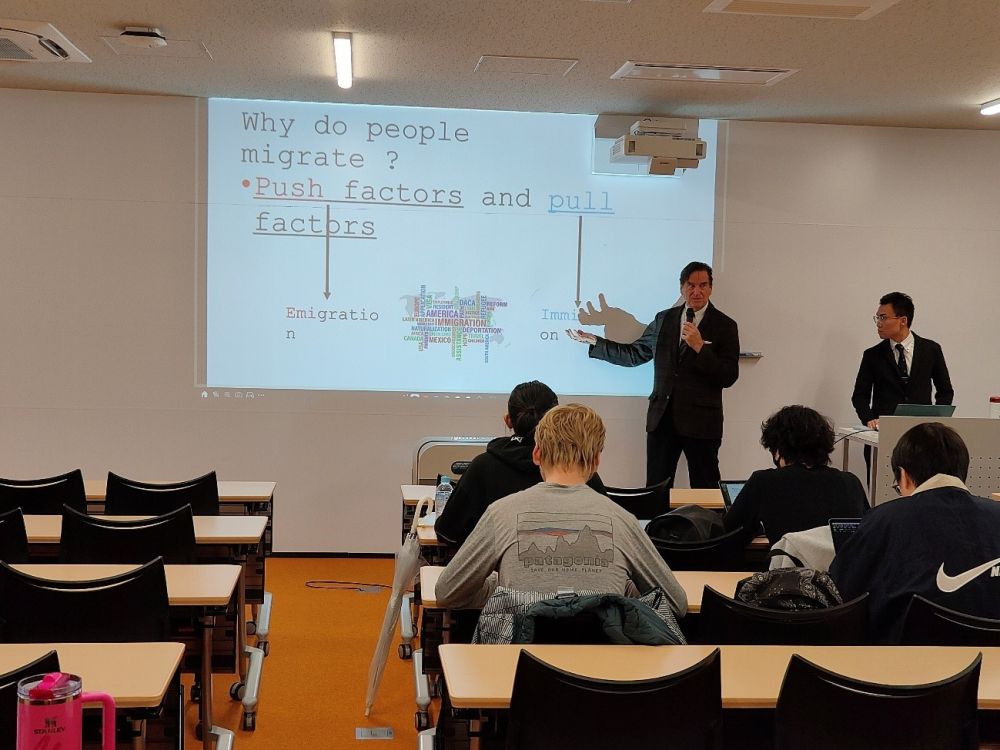
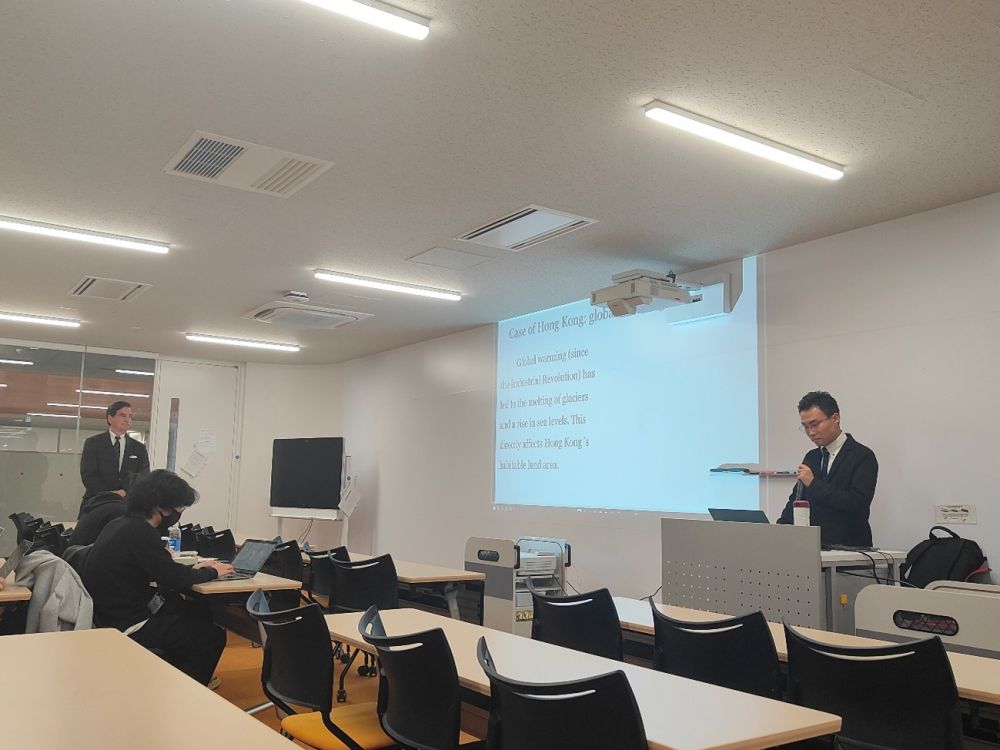
The speech then broadened to the global context by linking migration, climate change, and conflict. It explains how global warming, rising sea levels, and environmental degradation threaten Japan and other densely populated regions like Hong Kong. As habitable land shrinks and food production declines, societies face difficult choices between reducing agricultural land or emigrating abroad—each bringing environmental, social, and political risks. The speaker highlighted how ecological disruption can accelerate species extinction and even trigger pandemics, while cultural tensions between migrants and host societies can lead to conflict and war, which in turn generate further migration. The inclusion of a haiku about the war in Ukraine underscores the human dimension of displacement.
Finally, the speech contextualized migration as a multidisciplinary field involving economics, politics, religion, peace studies (irenology), and social identity. It presented global migration statistics and explains why people move—ranging from medical needs and safety concerns to employment opportunities and political stability. Case studies such as Hong Kong illustrate how resource constraints, educational limits, and climate impacts shape both immigration and emigration decisions. The speech was concluded by encouraging Chuo University students to understand these interconnected issues and contribute to solving the economic and social challenges raised by migration, ending with an invitation to participate in a related research survey.
