
On December 19th, Dr. Thusyanthy (Thusi) Lavan from the Queensland University of Technology (QUT) in Australia delivered an online lecture titled “Social Isolation and Risk-Taking Behavior: The Case of COVID-19 and Cryptocurrency.” The lecture focused on her recently published academic article and was part of the Seminar 1 course, taught by Assistant Professor Toyohiko Sugimoto at GLOMAC. This guest presentation took place for the second consecutive year in 2025, following a successful session at the same time as the previous year.
Dr. Lavan, a Lecturer in Marketing at the School of Advertising, Marketing, and Public Relations, QUT Business School, holds a PhD in Marketing from QUT, earned in 2022. She holds a distinguished educational and practical background. Prior to her tenure at QUT, Dr. Lavan amassed over a decade of teaching experience as a Full-time Lecturer in Marketing and Associate Lecturer at two esteemed state universities in Sri Lanka. Complementing her academic journey, she brings valuable insights from her two years of service in the banking industry.
Her guest presentation consisted of two parts. First, she provided a brief overview of her academic background in Australia and then moved to the Q&A session. She completed her Bachelor of Business Administration (Honours, Specialisation in Marketing Management) at Eastern University, Sri Lanka, and an MSc in Management at the University of Sri Jayewardenepura, Sri Lanka, before moving to QUT, Australia, to pursue her PhD. It was a great opportunity for GLOMAC students, especially since many of them aspire to succeed overseas, and some wish to continue their studies abroad (e.g., pursuing a master's degree overseas). Although it was the first meeting with the guest speaker, students actively asked questions. These included:
“What traits or skills are essential for becoming an academic researcher?”
“What are the major reasons to try to find an academic position in Australia?”
“I struggle to motivate myself and work hard. Would you know any tips to help us stay motivated and continue working hard?”
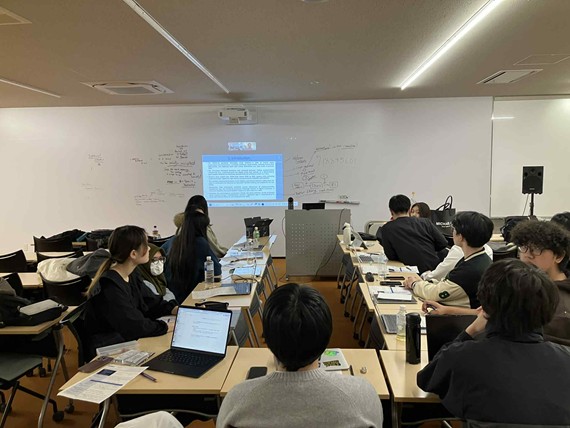
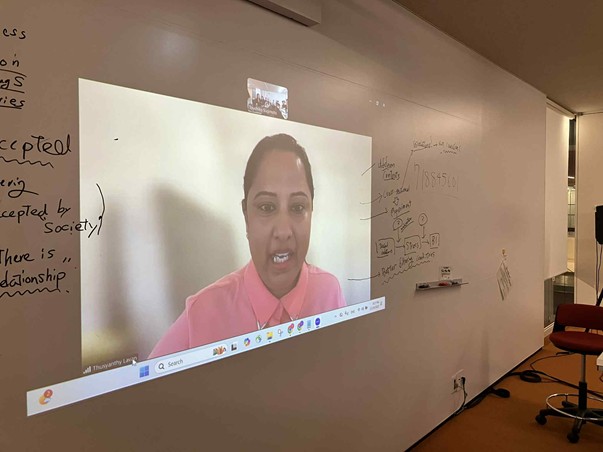
In the second part of her presentation, Dr. Lavan discussed her research on how human risk-taking behaviors may be linked to social isolation. She explained the effects of social isolation such as those experienced during COVID-19 lockdowns on risk-taking behavior, for instance, in cryptocurrency investments. These behaviors often occur in highly uncertain situations that involve potential significant gains and losses. Dr. Lavan’s research shows that social isolation directly increases risk-taking behaviors (the main effect) and also amplifies them through heightened perceived stress (the indirect effect) in unpredictable circumstances. She pointed out that social isolation can intensify perceived stress, which may lead to riskier purchasing decisions. Furthermore, she emphasized the significance of this research for various practitioners, including financial consultants, marketers, and policymakers. For example, government policymakers can create strategies to promote economic stability and mental health by integrating access to financial advice and psychological support into public health initiatives, particularly during or after crises that result in widespread social isolation.
For most students, even though it was their first time encountering academic research conducted by an international scholar, they demonstrated high levels of concentration and active engagement throughout the lecture. In this Seminar 1 course, students are learning research methods, and they applied their knowledge by analyzing the research methods that she used, such as research design, sampling methods, and data collection techniques. After her presentation, students actively asked questions. These included specific inquiries about her research, such as:
“How can we formulate effective hypotheses?”
“How can we transform academic findings into meaningful practical insights?”
“What would be the meaning of a longitudinal study? How does it relate to the findings of this research?”
Overall, this guest speech provided GLOMAC students with a valuable opportunity to enhance their research skills and academic communication abilities, while also gaining insights to help develop their future aspirations.
